<?xml version="1.0" encoding="UTF-8"?>

<rdf:RDF
 xmlns:rdf="http://www.w3.org/1999/02/22-rdf-syntax-ns#"
 xmlns="http://purl.org/rss/1.0/"
 xmlns:content="http://purl.org/rss/1.0/modules/content/"
 xmlns:taxo="http://purl.org/rss/1.0/modules/taxonomy/"
 xmlns:dc="http://purl.org/dc/elements/1.1/"
 xmlns:syn="http://purl.org/rss/1.0/modules/syndication/"
 xmlns:admin="http://webns.net/mvcb/"
>

<channel rdf:about="http://doi.wiley.com/10.1002/(ISSN)1521-3935">
<title>News from Macromolecular Chemistry and Physics</title>
<link>http://doi.wiley.com/10.1002/(ISSN)1521-3935</link>
<description>News from the journal Macromolecular Chemistry and Physics</description>
<dc:language>en</dc:language>
<dc:rights>Copyright 2011, Wiley-VCH Verlag GmbH &#x26;amp; Co. KGaA</dc:rights>
<dc:date>2013-06-17T23:53:49Z</dc:date>
<dc:publisher>Wiley-VCH</dc:publisher>
<dc:creator>info@wiley-vch.de</dc:creator>
<dc:subject>Chemistry</dc:subject>
<syn:updateBase>2001-01-01T00:00+00:00</syn:updateBase>
<syn:updateFrequency>1</syn:updateFrequency>
<syn:updatePeriod>hourly</syn:updatePeriod>
<items>
 <rdf:Seq>
  <rdf:li rdf:resource="http://onlinelibrary.wiley.com/journal/10.1002/(ISSN)1521-3935/homepage/news/19302.en.html" />
  <rdf:li rdf:resource="http://onlinelibrary.wiley.com/journal/10.1002/(ISSN)1521-3935/homepage/news/19257.en.html" />
  <rdf:li rdf:resource="http://onlinelibrary.wiley.com/journal/10.1002/(ISSN)1521-3935/homepage/news/19063.en.html" />
  <rdf:li rdf:resource="http://onlinelibrary.wiley.com/journal/10.1002/(ISSN)1521-3935/homepage/news/19014.en.html" />
  <rdf:li rdf:resource="http://onlinelibrary.wiley.com/journal/10.1002/(ISSN)1521-3935/homepage/news/18965.en.html" />
  <rdf:li rdf:resource="http://onlinelibrary.wiley.com/journal/10.1002/(ISSN)1521-3935/homepage/news/18963.en.html" />
  <rdf:li rdf:resource="http://onlinelibrary.wiley.com/journal/10.1002/(ISSN)1521-3935/homepage/news/18788.en.html" />
  <rdf:li rdf:resource="http://onlinelibrary.wiley.com/journal/10.1002/(ISSN)1521-3935/homepage/news/18755.en.html" />
  <rdf:li rdf:resource="http://onlinelibrary.wiley.com/journal/10.1002/(ISSN)1521-3935/homepage/news/18562.en.html" />
  <rdf:li rdf:resource="http://onlinelibrary.wiley.com/journal/10.1002/(ISSN)1521-3935/homepage/news/18555.en.html" />
  <rdf:li rdf:resource="http://onlinelibrary.wiley.com/journal/10.1002/(ISSN)1521-3935/homepage/news/18539.en.html" />
  <rdf:li rdf:resource="http://onlinelibrary.wiley.com/journal/10.1002/(ISSN)1521-3935/homepage/news/18532.en.html" />
  <rdf:li rdf:resource="http://onlinelibrary.wiley.com/journal/10.1002/(ISSN)1521-3935/homepage/news/18448.en.html" />
  <rdf:li rdf:resource="http://onlinelibrary.wiley.com/journal/10.1002/(ISSN)1521-3935/homepage/news/18416.en.html" />
  <rdf:li rdf:resource="http://onlinelibrary.wiley.com/journal/10.1002/(ISSN)1521-3935/homepage/news/18402.en.html" />
  <rdf:li rdf:resource="http://onlinelibrary.wiley.com/journal/10.1002/(ISSN)1521-3935/homepage/news/18366.en.html" />
  <rdf:li rdf:resource="http://onlinelibrary.wiley.com/journal/10.1002/(ISSN)1521-3935/homepage/news/18308.en.html" />
  <rdf:li rdf:resource="http://onlinelibrary.wiley.com/journal/10.1002/(ISSN)1521-3935/homepage/news/18285.en.html" />
  <rdf:li rdf:resource="http://onlinelibrary.wiley.com/journal/10.1002/(ISSN)1521-3935/homepage/news/18250.en.html" />
  <rdf:li rdf:resource="http://onlinelibrary.wiley.com/journal/10.1002/(ISSN)1521-3935/homepage/news/18131.en.html" />
  <rdf:li rdf:resource="http://onlinelibrary.wiley.com/journal/10.1002/(ISSN)1521-3935/homepage/news/18124.en.html" />
  <rdf:li rdf:resource="http://onlinelibrary.wiley.com/journal/10.1002/(ISSN)1521-3935/homepage/news/18117.en.html" />
  <rdf:li rdf:resource="http://onlinelibrary.wiley.com/journal/10.1002/(ISSN)1521-3935/homepage/news/17844.en.html" />
  <rdf:li rdf:resource="http://onlinelibrary.wiley.com/journal/10.1002/(ISSN)1521-3935/homepage/news/18104.en.html" />
  <rdf:li rdf:resource="http://onlinelibrary.wiley.com/journal/10.1002/(ISSN)1521-3935/homepage/news/17504.en.html" />
  <rdf:li rdf:resource="http://onlinelibrary.wiley.com/journal/10.1002/(ISSN)1521-3935/homepage/news/17497.en.html" />
  <rdf:li rdf:resource="http://onlinelibrary.wiley.com/journal/10.1002/(ISSN)1521-3935/homepage/news/16903.en.html" />
  <rdf:li rdf:resource="http://onlinelibrary.wiley.com/journal/10.1002/(ISSN)1521-3935/homepage/news/16741.en.html" />
  <rdf:li rdf:resource="http://onlinelibrary.wiley.com/journal/10.1002/(ISSN)1521-3935/homepage/news/15936.en.html" />
  <rdf:li rdf:resource="http://onlinelibrary.wiley.com/journal/10.1002/(ISSN)1521-3935/homepage/news/15929.en.html" />
  <rdf:li rdf:resource="http://onlinelibrary.wiley.com/journal/10.1002/(ISSN)1521-3935/homepage/news/15727.en.html" />
  <rdf:li rdf:resource="http://onlinelibrary.wiley.com/journal/10.1002/(ISSN)1521-3935/homepage/news/15656.en.html" />
  <rdf:li rdf:resource="http://onlinelibrary.wiley.com/journal/10.1002/(ISSN)1521-3935/homepage/news/15603.en.html" />
  <rdf:li rdf:resource="http://onlinelibrary.wiley.com/journal/10.1002/(ISSN)1521-3935/homepage/news/15407.en.html" />
  <rdf:li rdf:resource="http://onlinelibrary.wiley.com/journal/10.1002/(ISSN)1521-3935/homepage/news/15227.en.html" />
  <rdf:li rdf:resource="http://onlinelibrary.wiley.com/journal/10.1002/(ISSN)1521-3935/homepage/news/15220.en.html" />
  <rdf:li rdf:resource="http://onlinelibrary.wiley.com/journal/10.1002/(ISSN)1521-3935/homepage/news/15160.en.html" />
  <rdf:li rdf:resource="http://onlinelibrary.wiley.com/journal/10.1002/(ISSN)1521-3935/homepage/news/15134.en.html" />
  <rdf:li rdf:resource="http://onlinelibrary.wiley.com/journal/10.1002/(ISSN)1521-3935/homepage/news/15013.en.html" />
  <rdf:li rdf:resource="http://onlinelibrary.wiley.com/journal/10.1002/(ISSN)1521-3935/homepage/news/14835.en.html" />
  <rdf:li rdf:resource="http://onlinelibrary.wiley.com/journal/10.1002/(ISSN)1521-3935/homepage/news/14701.en.html" />
  <rdf:li rdf:resource="http://onlinelibrary.wiley.com/journal/10.1002/(ISSN)1521-3935/homepage/news/14687.en.html" />
  <rdf:li rdf:resource="http://onlinelibrary.wiley.com/journal/10.1002/(ISSN)1521-3935/homepage/news/14565.en.html" />
  <rdf:li rdf:resource="http://onlinelibrary.wiley.com/journal/10.1002/(ISSN)1521-3935/homepage/news/14558.en.html" />
  <rdf:li rdf:resource="http://onlinelibrary.wiley.com/journal/10.1002/(ISSN)1521-3935/homepage/news/14514.en.html" />
  <rdf:li rdf:resource="http://onlinelibrary.wiley.com/journal/10.1002/(ISSN)1521-3935/homepage/news/14256.en.html" />
  <rdf:li rdf:resource="http://onlinelibrary.wiley.com/journal/10.1002/(ISSN)1521-3935/homepage/news/14219.en.html" />
  <rdf:li rdf:resource="http://onlinelibrary.wiley.com/journal/10.1002/(ISSN)1521-3935/homepage/news/13927.en.html" />
  <rdf:li rdf:resource="http://onlinelibrary.wiley.com/journal/10.1002/(ISSN)1521-3935/homepage/news/13934.en.html" />
  <rdf:li rdf:resource="http://onlinelibrary.wiley.com/journal/10.1002/(ISSN)1521-3935/homepage/news/13941.en.html" />
  <rdf:li rdf:resource="http://onlinelibrary.wiley.com/journal/10.1002/(ISSN)1521-3935/homepage/news/13771.en.html" />
  <rdf:li rdf:resource="http://onlinelibrary.wiley.com/journal/10.1002/(ISSN)1521-3935/homepage/news/13516.en.html" />
  <rdf:li rdf:resource="http://onlinelibrary.wiley.com/journal/10.1002/(ISSN)1521-3935/homepage/news/13444.en.html" />
  <rdf:li rdf:resource="http://onlinelibrary.wiley.com/journal/10.1002/(ISSN)1521-3935/homepage/news/13647.en.html" />
  <rdf:li rdf:resource="http://onlinelibrary.wiley.com/journal/10.1002/(ISSN)1521-3935/homepage/news/13640.en.html" />
  <rdf:li rdf:resource="http://onlinelibrary.wiley.com/journal/10.1002/(ISSN)1521-3935/homepage/news/12900.en.html" />
  <rdf:li rdf:resource="http://onlinelibrary.wiley.com/journal/10.1002/(ISSN)1521-3935/homepage/news/12893.en.html" />
  <rdf:li rdf:resource="http://onlinelibrary.wiley.com/journal/10.1002/(ISSN)1521-3935/homepage/news/12662.en.html" />
  <rdf:li rdf:resource="http://onlinelibrary.wiley.com/journal/10.1002/(ISSN)1521-3935/homepage/news/12654.en.html" />
  <rdf:li rdf:resource="http://onlinelibrary.wiley.com/journal/10.1002/(ISSN)1521-3935/homepage/news/12558.en.html" />
  <rdf:li rdf:resource="http://onlinelibrary.wiley.com/journal/10.1002/(ISSN)1521-3935/homepage/news/12549.en.html" />
  <rdf:li rdf:resource="http://onlinelibrary.wiley.com/journal/10.1002/(ISSN)1521-3935/homepage/news/12374.en.html" />
  <rdf:li rdf:resource="http://onlinelibrary.wiley.com/journal/10.1002/(ISSN)1521-3935/homepage/news/12367.en.html" />
  <rdf:li rdf:resource="http://onlinelibrary.wiley.com/journal/10.1002/(ISSN)1521-3935/homepage/news/12094.en.html" />
  <rdf:li rdf:resource="http://onlinelibrary.wiley.com/journal/10.1002/(ISSN)1521-3935/homepage/news/12093.en.html" />
  <rdf:li rdf:resource="http://onlinelibrary.wiley.com/journal/10.1002/(ISSN)1521-3935/homepage/news/11979.en.html" />
  <rdf:li rdf:resource="http://onlinelibrary.wiley.com/journal/10.1002/(ISSN)1521-3935/homepage/news/11662.en.html" />
  <rdf:li rdf:resource="http://onlinelibrary.wiley.com/journal/10.1002/(ISSN)1521-3935/homepage/news/11655.en.html" />
  <rdf:li rdf:resource="http://onlinelibrary.wiley.com/journal/10.1002/(ISSN)1521-3935/homepage/news/11648.en.html" />
  <rdf:li rdf:resource="http://onlinelibrary.wiley.com/journal/10.1002/(ISSN)1521-3935/homepage/news/11595.en.html" />
  <rdf:li rdf:resource="http://onlinelibrary.wiley.com/journal/10.1002/(ISSN)1521-3935/homepage/news/11364.en.html" />
  <rdf:li rdf:resource="http://onlinelibrary.wiley.com/journal/10.1002/(ISSN)1521-3935/homepage/news/11341.en.html" />
  <rdf:li rdf:resource="http://onlinelibrary.wiley.com/journal/10.1002/(ISSN)1521-3935/homepage/news/10908.en.html" />
  <rdf:li rdf:resource="http://onlinelibrary.wiley.com/journal/10.1002/(ISSN)1521-3935/homepage/news/10865.en.html" />
  <rdf:li rdf:resource="http://onlinelibrary.wiley.com/journal/10.1002/(ISSN)1521-3935/homepage/news/10864.en.html" />
  <rdf:li rdf:resource="http://onlinelibrary.wiley.com/journal/10.1002/(ISSN)1521-3935/homepage/news/10684.en.html" />
  <rdf:li rdf:resource="http://onlinelibrary.wiley.com/journal/10.1002/(ISSN)1521-3935/homepage/news/10554.en.html" />
  <rdf:li rdf:resource="http://onlinelibrary.wiley.com/journal/10.1002/(ISSN)1521-3935/homepage/news/10526.en.html" />
  <rdf:li rdf:resource="http://onlinelibrary.wiley.com/journal/10.1002/(ISSN)1521-3935/homepage/news/10520.en.html" />
  <rdf:li rdf:resource="http://onlinelibrary.wiley.com/journal/10.1002/(ISSN)1521-3935/homepage/news/10504.en.html" />
  <rdf:li rdf:resource="http://onlinelibrary.wiley.com/journal/10.1002/(ISSN)1521-3935/homepage/news/10412.en.html" />
  <rdf:li rdf:resource="http://onlinelibrary.wiley.com/journal/10.1002/(ISSN)1521-3935/homepage/news/10411.en.html" />
  <rdf:li rdf:resource="http://onlinelibrary.wiley.com/journal/10.1002/(ISSN)1521-3935/homepage/news/10334.en.html" />
  <rdf:li rdf:resource="http://onlinelibrary.wiley.com/journal/10.1002/(ISSN)1521-3935/homepage/news/10179.en.html" />
  <rdf:li rdf:resource="http://onlinelibrary.wiley.com/journal/10.1002/(ISSN)1521-3935/homepage/news/11385.en.html" />
  <rdf:li rdf:resource="http://onlinelibrary.wiley.com/journal/10.1002/(ISSN)1521-3935/homepage/news/10178.en.html" />
  <rdf:li rdf:resource="http://onlinelibrary.wiley.com/journal/10.1002/(ISSN)1521-3935/homepage/news/10138.en.html" />
  <rdf:li rdf:resource="http://onlinelibrary.wiley.com/journal/10.1002/(ISSN)1521-3935/homepage/news/10123.en.html" />
  <rdf:li rdf:resource="http://onlinelibrary.wiley.com/journal/10.1002/(ISSN)1521-3935/homepage/news/10111.en.html" />
  <rdf:li rdf:resource="http://onlinelibrary.wiley.com/journal/10.1002/(ISSN)1521-3935/homepage/news/14927.en.html" />
  <rdf:li rdf:resource="http://onlinelibrary.wiley.com/journal/10.1002/(ISSN)1521-3935/homepage/news/11387.en.html" />
  <rdf:li rdf:resource="http://onlinelibrary.wiley.com/journal/10.1002/(ISSN)1521-3935/homepage/news/11389.en.html" />
  <rdf:li rdf:resource="http://onlinelibrary.wiley.com/journal/10.1002/(ISSN)1521-3935/homepage/news/11390.en.html" />
  <rdf:li rdf:resource="http://onlinelibrary.wiley.com/journal/10.1002/(ISSN)1521-3935/homepage/news/11391.en.html" />
  <rdf:li rdf:resource="http://onlinelibrary.wiley.com/journal/10.1002/(ISSN)1521-3935/homepage/news/11392.en.html" />
  <rdf:li rdf:resource="http://onlinelibrary.wiley.com/journal/10.1002/(ISSN)1521-3935/homepage/news/11393.en.html" />
  <rdf:li rdf:resource="http://onlinelibrary.wiley.com/journal/10.1002/(ISSN)1521-3935/homepage/news/11394.en.html" />
  <rdf:li rdf:resource="http://onlinelibrary.wiley.com/journal/10.1002/(ISSN)1521-3935/homepage/news/11395.en.html" />
  <rdf:li rdf:resource="http://onlinelibrary.wiley.com/journal/10.1002/(ISSN)1521-3935/homepage/news/11396.en.html" />
  <rdf:li rdf:resource="http://onlinelibrary.wiley.com/journal/10.1002/(ISSN)1521-3935/homepage/news/11397.en.html" />
  <rdf:li rdf:resource="http://onlinelibrary.wiley.com/journal/10.1002/(ISSN)1521-3935/homepage/news/7483.en.html" />
  <rdf:li rdf:resource="http://onlinelibrary.wiley.com/journal/10.1002/(ISSN)1521-3935/homepage/news/7203.en.html" />
  <rdf:li rdf:resource="http://onlinelibrary.wiley.com/journal/10.1002/(ISSN)1521-3935/homepage/news/7196.en.html" />
  <rdf:li rdf:resource="http://onlinelibrary.wiley.com/journal/10.1002/(ISSN)1521-3935/homepage/news/6392.en.html" />
  <rdf:li rdf:resource="http://onlinelibrary.wiley.com/journal/10.1002/(ISSN)1521-3935/homepage/news/6180.en.html" />
  <rdf:li rdf:resource="http://onlinelibrary.wiley.com/journal/10.1002/(ISSN)1521-3935/homepage/news/5483.en.html" />
  <rdf:li rdf:resource="http://onlinelibrary.wiley.com/journal/10.1002/(ISSN)1521-3935/homepage/news/5339.en.html" />
  <rdf:li rdf:resource="http://onlinelibrary.wiley.com/journal/10.1002/(ISSN)1521-3935/homepage/news/5196.en.html" />
  <rdf:li rdf:resource="http://onlinelibrary.wiley.com/journal/10.1002/(ISSN)1521-3935/homepage/news/5190.en.html" />
 </rdf:Seq>
</items>
</channel>
<item rdf:about="http://onlinelibrary.wiley.com/journal/10.1002/(ISSN)1521-3935/homepage/news/19302.en.html">
<title>TREND: The Solvent in Physical Gelation: Polymers Versus Organogelators</title>
<link>http://onlinelibrary.wiley.com/journal/10.1002/(ISSN)1521-3935/homepage/news/19302.en.html</link>
<dc:date>2013-06-11T00:00:00+02:00</dc:date>
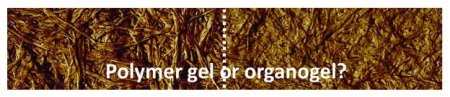
<content:encoded><![CDATA[<p><img src="http://www.wiley-vch.de/img/news/Trend_214_6_Guenet.jpg" alt="TREND: The Solvent in Physical Gelation: Polymers Versus Organogelators" align="left" hspace="5" vspace="5" border="0" /></p><i>Debarshi Dasgupta, Jean-Michel Guenet*</i><br><br>A discussion of the gelation mechanisms involved in polymer thermoreversible gels and organogels is presented. The implication of the solvent as an active actor and not only a mere diluent is shown.<br><br><a href="http://doi.wiley.com/10.1002/macp.201300094" target="_blank"><i>Macromol. Chem. Phys.</i>, DOI: 10.1002/macp.201300094</a>]]></content:encoded>
</item>
<item rdf:about="http://onlinelibrary.wiley.com/journal/10.1002/(ISSN)1521-3935/homepage/news/19257.en.html">
<title>Functional Polymers: Benzo[1,2-b:4,5-b&#x27;]dithiophene-alt-terthiophene Copolymers Containing Styryl-Triphenylamine Side Chains: Synthesis and Photovoltaic Performance Optimization with Fullerene Acceptors</title>
<link>http://onlinelibrary.wiley.com/journal/10.1002/(ISSN)1521-3935/homepage/news/19257.en.html</link>
<dc:date>2013-06-04T00:00:00+02:00</dc:date>
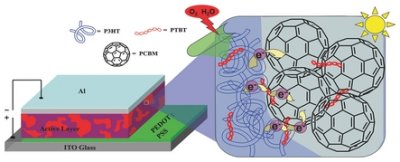
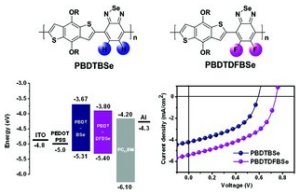
<content:encoded><![CDATA[<p><img src="http://www.wiley-vch.de/img/news/functpolym_214_8_Zhang.jpg" alt="Functional Polymers: Benzo[1,2-b:4,5-b']dithiophene-alt-terthiophene Copolymers Containing Styryl-Triphenylamine Side Chains: Synthesis and Photovoltaic Performance Optimization with Fullerene Acceptors" align="left" hspace="5" vspace="5" border="0" /></p><i>Xitian Wang, Zhi-Guo Zhang,* Wenli Tang, Suling Shen, Guo Liu, Dan Chi, Yongfang Li, Jizheng Wang</i><br><br>A new copolymer is designed and synthesized, and the photovoltaic performance is optimized with fullerene acceptors. The energy loss and the increase in the observed open-circuit voltages are quantitatively explained by the up-shifted lowest unoccupied molecular level of indene-C<sub>60</sub> bisadduct (ICBA) and the reduced saturation current in the blends.<br><br><a href="http://doi.wiley.com/10.1002/macp.201300041" target="_blank"><i>Macromol. Chem. Phys.</i>, DOI: 10.1002/macp.201300041</a>]]></content:encoded>
</item>
<item rdf:about="http://onlinelibrary.wiley.com/journal/10.1002/(ISSN)1521-3935/homepage/news/19063.en.html">
<title>POLYOLEFINS: Controlling Polyolefin Properties by In-Reactor Blending: 3. Mechanical Properties</title>
<link>http://onlinelibrary.wiley.com/journal/10.1002/(ISSN)1521-3935/homepage/news/19063.en.html</link>
<dc:date>2013-04-18T00:00:00+02:00</dc:date>
<content:encoded><![CDATA[<p><img src="http://www.wiley-vch.de/img/news/polyolefins_7_5_Ruff.jpg" alt="POLYOLEFINS: Controlling Polyolefin Properties by In-Reactor Blending: 3. Mechanical Properties" align="left" hspace="5" vspace="5" border="0" /></p><i>Martin Ruff,* Reinhold W. Lang, Christian Paulik</i><br><br>The effects of multi-stage (slurry) polymerization on mechanical properties of in-reactor blended UHMW-PE materials is presented, and it is shown that due to a controlled polymerized particle morphology, mechanical properties, such as impact properties can be regulated. <br><br><a href="http://doi.wiley.com/10.1002/mren.201200077" target="_blank"><i>Macromol. React. Eng.</i> DOI: 10.1002/mren.201200077</a><br><br>Other contributions to the article series on "Polyolefins - Catalyst and Process Innovations" can be found <a href="http://onlinelibrary.wiley.com/journal/10.1002/(ISSN)1862-8338/homepage/2465_olef.html" target="_blank">here</a>.]]></content:encoded>
</item>
<item rdf:about="http://onlinelibrary.wiley.com/journal/10.1002/(ISSN)1521-3935/homepage/news/19014.en.html">
<title>Functional Polymers: ZnII Bisterpyridine Metallopolymers: Improved Processability by the Introduction of Polymeric Side Chains</title>
<link>http://onlinelibrary.wiley.com/journal/10.1002/(ISSN)1521-3935/homepage/news/19014.en.html</link>
<dc:date>2013-04-03T00:00:00+02:00</dc:date>
<content:encoded><![CDATA[<p><img src="http://www.wiley-vch.de/img/news/functpolym_214_7_Schubert.jpg" alt="Functional Polymers: ZnII Bisterpyridine Metallopolymers: Improved Processability by the Introduction of Polymeric Side Chains" align="left" hspace="5" vspace="5" border="0" /></p><i>Andreas Wild, Anke Teichler, Christian von der Ehe, Andreas Winter, Martin D. Hager, Bing Yao, Baohua Zhang, Zhiyuan Xie, Wai-Yeung Wong,* Ulrich S. Schubert*</i><br><br>Tailoring of the optical and mechanical properties of bisterpyridine coordination polymers is enabled by the introduction of well-defined polymeric side chains. The resulting metallopolymers exhibit improved solubility and processability and can, therefore, easily be inkjet-printed. The photophysical properties of the so-produced homogeneous films are investigated and a proof-of-principle polymer light-emitting device can be constructed.<br><br><a href="http://doi.wiley.com/10.1002/macp.201300003" target="_blank"><i>Macromol. Chem. Phys.</i>, DOI: 10.1002/macp.201300003</a>]]></content:encoded>
</item>
<item rdf:about="http://onlinelibrary.wiley.com/journal/10.1002/(ISSN)1521-3935/homepage/news/18965.en.html">
<title>POLYOLEFINS: Analysis of Slurry-Phase Co-Polymerization of Ethylene and 1-Butene by Ziegler&#x96;Natta Catalysts Part 1: Experimental Activity Profiles</title>
<link>http://onlinelibrary.wiley.com/journal/10.1002/(ISSN)1521-3935/homepage/news/18965.en.html</link>
<dc:date>2013-03-19T00:00:00+01:00</dc:date>
<content:encoded><![CDATA[<p><img src="http://www.wiley-vch.de/img/news/polyolefins_7_3_Rawatal.jpg" alt="POLYOLEFINS: Analysis of Slurry-Phase Co-Polymerization of Ethylene and 1-Butene by ZieglerNatta Catalysts Part 1: Experimental Activity Profiles" align="left" hspace="5" vspace="5" border="0" /></p><i>John T. McCoy, Joao B. P. Soares, Randhir Rawatlal*</i><br><br>The activity of ZieglerNatta catalysts for ethylene polymerization is studied, and a method developed to extract meaningful kinetic parameters from experimental data. Four model parameters are required to reproduce polymerization rate profiles for a range of laboratory experimental conditions. <br><br><a href="http://doi.wiley.com/10.1002/mren.201200078" target="_blank"><i>Macromol. React. Eng.</i> DOI: 10.1002/mren.201200078</a><br><br>Other contributions to the article series on "Polyolefins - Catalyst and Process Innovations" can be found <a href="http://onlinelibrary.wiley.com/journal/10.1002/(ISSN)1862-8338/homepage/2465_olef.html" target="_blank">here</a>.]]></content:encoded>
</item>
<item rdf:about="http://onlinelibrary.wiley.com/journal/10.1002/(ISSN)1521-3935/homepage/news/18963.en.html">
<title>TALENT: Non-Natural Amino Acids for Protein Engineering and New Protein Chemistries</title>
<link>http://onlinelibrary.wiley.com/journal/10.1002/(ISSN)1521-3935/homepage/news/18963.en.html</link>
<dc:date>2013-03-19T00:10:00+01:00</dc:date>
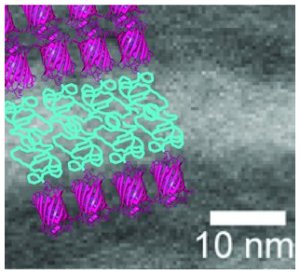
<content:encoded><![CDATA[<p><img src="http://www.wiley-vch.de/img/news/Talent_214_6_Kwon.jpg" alt="TALENT: Non-Natural Amino Acids for Protein Engineering and New Protein Chemistries" align="left" hspace="5" vspace="5" border="0" /></p><i>Inchan Kwon,* Sung In Lim</i><br><br>Two distinct strategies, residue-specific and site-specific incorporation, allow biosynthesis of a protein containing non-natural amino acids. Non-natural amino acids introduced into a protein can be used to manipulate spectral and catalytic properties of a protein and provide new protein chemistries for bioconjugation with versatile molecules. <br><br><a href="http://doi.wiley.com/10.1002/macp.201200710" target="_blank"><i>Macromol. Chem. Phys.</i>, DOI: 10.1002/macp.201200710</a>]]></content:encoded>
</item>
<item rdf:about="http://onlinelibrary.wiley.com/journal/10.1002/(ISSN)1521-3935/homepage/news/18788.en.html">
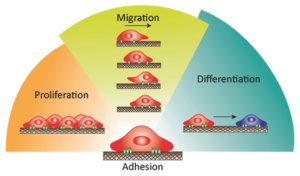
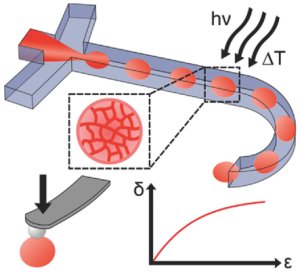
<title>TREND: MAPLE Deposition of Macromolecules</title>
<link>http://onlinelibrary.wiley.com/journal/10.1002/(ISSN)1521-3935/homepage/news/18788.en.html</link>
<dc:date>2013-02-07T00:00:00+01:00</dc:date>
<content:encoded><![CDATA[<p><img src="http://www.wiley-vch.de/img/news/Trend_214_5_Priestley.jpg" alt="TREND: MAPLE Deposition of Macromolecules" align="left" hspace="5" vspace="5" border="0" /></p><i>Kimberly B. Shepard, Rodney D. Priestley*</i><br><br>Matrix-assisted pulsed laser evaporation (MAPLE) is used to deposit thin films of a vast range of macromolecules, including polymers, proteins, and composite materials. The numerous advantages of MAPLE are discussed, and recent reports of MAPLE-deposited films for electronic and medical applications are highlighted. <br><br><a href="http://doi.wiley.com/10.1002/macp.201200621" target="_blank"><i>Macromol. Chem. Phys.</i>, DOI: 10.1002/macp.201200621</a>]]></content:encoded>
</item>
<item rdf:about="http://onlinelibrary.wiley.com/journal/10.1002/(ISSN)1521-3935/homepage/news/18755.en.html">
<title>Functional Polymers: Morphology and Field-Effect Transistor Characteristics of Electrospun Nanofibers Prepared From Crystalline Poly(3-hexylthiophene) and Polyacrylate Blends</title>
<link>http://onlinelibrary.wiley.com/journal/10.1002/(ISSN)1521-3935/homepage/news/18755.en.html</link>
<dc:date>2013-01-31T00:00:00+01:00</dc:date>
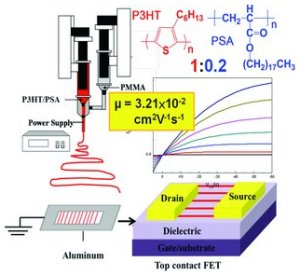
<content:encoded><![CDATA[<p><img src="http://www.wiley-vch.de/img/news/functpolym_214_4_Chen.jpg" alt="Functional Polymers: Morphology and Field-Effect Transistor Characteristics of Electrospun Nanofibers Prepared From Crystalline Poly(3-hexylthiophene) and Polyacrylate Blends" align="left" hspace="5" vspace="5" border="0" /></p><i>Chih-Chieh Chou, Hung-Chin Wu, Chih-Jung Lin, Ebrahim Ghelichkhani, Wen-Chang Chen*</i><br><br>Nanofiber field-effect transistors (FETs) based on crystalline poly(3-hexylthiophene) (P3HT) and poly(stearyl acrylates) (PSA) or poly(n-lauryl acrylate) (PnLA) blends are fabricated via coaxial electrospinning (ES). The maximum FET mobility is obtained for P3HT/PSA (1:0.2) blends. The crystalline PSA promotes the larger crystallinity of P3HT in the ES nanofibers, which subsequently leads to the observation of higher mobility and improves the air stability. <br><br><a href="http://doi.wiley.com/10.1002/macp.201200580" target="_blank"><i>Macromol. Chem. Phys.</i>, DOI: 10.1002/macp.201200580</a>]]></content:encoded>
</item>
<item rdf:about="http://onlinelibrary.wiley.com/journal/10.1002/(ISSN)1521-3935/homepage/news/18562.en.html">
<title>Functional Polymers: Accessing New DPP-Based Copolymers by Direct Heteroarylation Polymerization</title>
<link>http://onlinelibrary.wiley.com/journal/10.1002/(ISSN)1521-3935/homepage/news/18562.en.html</link>
<dc:date>2013-01-21T00:00:00+01:00</dc:date>
<content:encoded><![CDATA[<p><img src="http://www.wiley-vch.de/img/news/functpolym_214_4_Leclerc.jpg" alt="Functional Polymers: Accessing New DPP-Based Copolymers by Direct Heteroarylation Polymerization" align="left" hspace="5" vspace="5" border="0" /></p><i>Jean-Rémi Pouliot, Lauren G. Mercier, Samuel Caron, Mario Leclerc*</i><br><br>The direct heteroarylation polymerization methodology was adapted for the diketopyrrolopyrrole moiety, giving rise to copolymers that were difficult to obtain from standard Stille or Suzuki couplings. These new low-bandgap polymers proved to be efficient electron-transporting materials enabling possible applications in all-plastic solar cells. <br><br><a href="http://doi.wiley.com/10.1002/macp.201200573" target="_blank"><i>Macromol. Chem. Phys.</i>, DOI: 10.1002/macp.201200573</a>]]></content:encoded>
</item>
<item rdf:about="http://onlinelibrary.wiley.com/journal/10.1002/(ISSN)1521-3935/homepage/news/18555.en.html">
<title>Functional Polymers: Thermochromic and Photovoltaic Properties of an Alternating Copolymer of Dithieno[3,2-b:2&#x27;,3&#x27;-d]thiophene and Thieno[3,4-c]pyrrole-4,6-dione</title>
<link>http://onlinelibrary.wiley.com/journal/10.1002/(ISSN)1521-3935/homepage/news/18555.en.html</link>
<dc:date>2013-01-21T00:10:00+01:00</dc:date>
<content:encoded><![CDATA[<p><img src="http://www.wiley-vch.de/img/news/functpolym_214_4_Ding.jpg" alt="Functional Polymers: Thermochromic and Photovoltaic Properties of an Alternating Copolymer of Dithieno[3,2-b:2',3'-d]thiophene and Thieno[3,4-c]pyrrole-4,6-dione" align="left" hspace="5" vspace="5" border="0" /></p><i>Zhao Li,* Patrick Malenfant, Ye Tao, Jianfu Ding*</i><br><br>A new alternating conjugated polymer, PDTTTPD, based on electron-rich dithieno[3,2-b:2',3'-d]thiophene (DTT) and electron-deficient thieno[3,4-c]pyrrole-4,6-dione (TPD) building block is designed and synthesized. PDTTTPD shows strong thermochromic effect in chlorobenzene solution and modest PCE of 2.1% in organic solar cell devices due to the steric hindrance induced twisting of the conjugated main chain. A general design rule is then suggested to control the main chain conformation of polymer materials for photovoltaic applications. <br><br><a href="http://doi.wiley.com/10.1002/macp.201200468" target="_blank"><i>Macromol. Chem. Phys.</i>, DOI: 10.1002/macp.201200468</a>]]></content:encoded>
</item>
<item rdf:about="http://onlinelibrary.wiley.com/journal/10.1002/(ISSN)1521-3935/homepage/news/18539.en.html">
<title>Functional Polymers: Recent Progress in Polymer White Light-Emitting Materials and Devices</title>
<link>http://onlinelibrary.wiley.com/journal/10.1002/(ISSN)1521-3935/homepage/news/18539.en.html</link>
<dc:date>2013-01-17T00:00:00+01:00</dc:date>
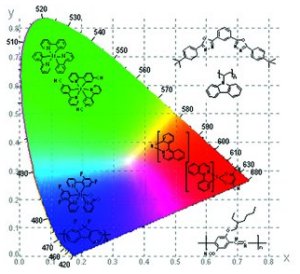
<content:encoded><![CDATA[<p><img src="http://www.wiley-vch.de/img/news/functpolym_214_4_Tang.jpg" alt="Functional Polymers: Recent Progress in Polymer White Light-Emitting Materials and Devices" align="left" hspace="5" vspace="5" border="0" /></p><i>Chao Tang*, Xu-Dong Liu, Feng Liu, Xu-Liang Wang, Hui Xu, Wei Huang*</i><br><br>Polymer white light-emitting diodes (PWLEDs) are one of the most intensively researched topics in PLED. At present, there are two main methods to realize white emission in PLED. The one is to dope the host with different guests with different color, and the other is to prepare single white polymer by designing the molecular structure. Improving the performance of PWLED depends on the understanding of materials structure and properties, materials purification, and device engineering. <br><br><a href="http://doi.wiley.com/10.1002/macp.201200305" target="_blank"><i>Macromol. Chem. Phys.</i>, DOI: 10.1002/macp.201200305</a>]]></content:encoded>
</item>
<item rdf:about="http://onlinelibrary.wiley.com/journal/10.1002/(ISSN)1521-3935/homepage/news/18532.en.html">
<title>Functional Polymers: Screening of Film-Formation Qualities of Various Solvent Systems for &#x3C0;-Conjugated Polymers Via Combinatorial Inkjet Printing</title>
<link>http://onlinelibrary.wiley.com/journal/10.1002/(ISSN)1521-3935/homepage/news/18532.en.html</link>
<dc:date>2013-01-17T00:10:00+01:00</dc:date>
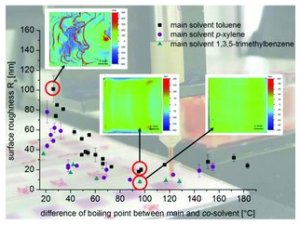
<content:encoded><![CDATA[<p><img src="http://www.wiley-vch.de/img/news/functpolym_214_4_Schubert.jpg" alt="Functional Polymers: Screening of Film-Formation Qualities of Various Solvent Systems for π-Conjugated Polymers Via Combinatorial Inkjet Printing" align="left" hspace="5" vspace="5" border="0" /></p><i>Anke Teichler, Jolke Perelaer, Ulrich S. Schubert*</i><br><br>A systematical investigation of the relationships between the choice of solvent system and the film quality of inkjet printed π-conjugated polymer films is presented. A significant influence of the boiling points of the chosen main and co-solvents is observed, leading to the identification of new solvent systems that reveal improved film qualities.<br><br><a href="http://doi.wiley.com/10.1002/macp.201200547" target="_blank"><i>Macromol. Chem. Phys.</i>, DOI: 10.1002/macp.201200547</a>]]></content:encoded>
</item>
<item rdf:about="http://onlinelibrary.wiley.com/journal/10.1002/(ISSN)1521-3935/homepage/news/18448.en.html">
<title>TREND: Recent Trends in the Chemistry of Shape-Memory Polymers</title>
<link>http://onlinelibrary.wiley.com/journal/10.1002/(ISSN)1521-3935/homepage/news/18448.en.html</link>
<dc:date>2013-01-03T00:00:00+01:00</dc:date>
<content:encoded><![CDATA[<p><img src="http://www.wiley-vch.de/img/news/Trend_214_4_Lendlein.jpg" alt="TREND: Recent Trends in the Chemistry of Shape-Memory Polymers" align="left" hspace="5" vspace="5" border="0" /></p><i>Konstanze K. Julich-Gruner, Candy Löwenberg, Axel T. Neffe, Marc Behl, Andreas Lendlein*</i><br><br>Shape-memory polymers (SMPs) are stimuli-sensitive materials capable of performing complex movements on demand. This trend article highlights current approaches in the chemistry of SMPs (e.g., tailoring segment chemistry to integrate additional functions). It is illustrated that SMPs can be constructed on the molecular level as a modular system of different building blocks and netpoints. <br><br><a href="http://doi.wiley.com/10.1002/macp.201200607" target="_blank"><i>Macromol. Chem. Phys.</i>, DOI: 10.1002/macp.201200607</a>]]></content:encoded>
</item>
<item rdf:about="http://onlinelibrary.wiley.com/journal/10.1002/(ISSN)1521-3935/homepage/news/18416.en.html">
<title>Functional Polymers: Conformational Behavior of Conjugated Polymers With Oligo(phenylene vinylene) Side Chains</title>
<link>http://onlinelibrary.wiley.com/journal/10.1002/(ISSN)1521-3935/homepage/news/18416.en.html</link>
<dc:date>2012-12-19T00:00:00+01:00</dc:date>
<content:encoded><![CDATA[<p><img src="http://www.wiley-vch.de/img/news/functpolym_214_3_Koeckelberghs.jpg" alt="Functional Polymers: Conformational Behavior of Conjugated Polymers With Oligo(phenylene vinylene) Side Chains" align="left" hspace="5" vspace="5" border="0" /></p><i>Helmuth Peeters, Guy Koeckelberghs*</i><br><br>Conjugated polymers with different oligo(phenylene vinylene) (OPV) side chains are prepared. The influence of the length of the OPV side chain and the placement of chiral substituents on the optical properties, the supramolecular structure, and the chiral expression is investigated. <br><br><a href="http://doi.wiley.com/10.1002/macp.201200584" target="_blank"><i>Macromol. Chem. Phys.</i>, DOI: 10.1002/macp.201200584</a>]]></content:encoded>
</item>
<item rdf:about="http://onlinelibrary.wiley.com/journal/10.1002/(ISSN)1521-3935/homepage/news/18402.en.html">
<title>TREND: Can the Structures of Semicrystalline Polymers be Controlled Using Interfacial Crystallographic Interactions?</title>
<link>http://onlinelibrary.wiley.com/journal/10.1002/(ISSN)1521-3935/homepage/news/18402.en.html</link>
<dc:date>2012-12-19T00:10:00+01:00</dc:date>
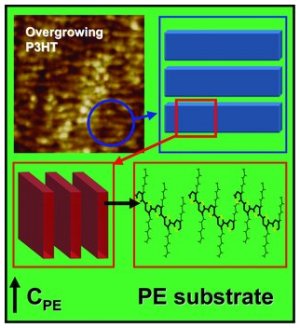
<content:encoded><![CDATA[<p><img src="http://www.wiley-vch.de/img/news/Trend_214_4_Yan.jpg" alt="TREND: Can the Structures of Semicrystalline Polymers be Controlled Using Interfacial Crystallographic Interactions?" align="left" hspace="5" vspace="5" border="0" /></p><i>Haixin Zhou, Shouke Yan*</i><br><br>Epitaxy based on crystallographic interaction can govern the crystal structure of overgrowing polymers. It therefore provides a simple and efficient way to fabricate ordered structures of homopolymers with controlled chain orientation, crystal modification, and spatial arrangement of the backbone chain. An expansion of this method to control structures of polymer blends is a trend and challenge in the field of polymer science. <br><br><a href="http://doi.wiley.com/10.1002/macp.201200530" target="_blank"><i>Macromol. Chem. Phys.</i>, DOI: 10.1002/macp.201200530</a>]]></content:encoded>
</item>
<item rdf:about="http://onlinelibrary.wiley.com/journal/10.1002/(ISSN)1521-3935/homepage/news/18366.en.html">
<title>TREND: Microstructure Control: An Underestimated Parameter in Recent Polymer Design</title>
<link>http://onlinelibrary.wiley.com/journal/10.1002/(ISSN)1521-3935/homepage/news/18366.en.html</link>
<dc:date>2012-12-12T00:00:00+01:00</dc:date>
<content:encoded><![CDATA[<p><img src="http://www.wiley-vch.de/img/news/Trend_214_4_Lutz.jpg" alt="TREND: Microstructure Control: An Underestimated Parameter in Recent Polymer Design" align="left" hspace="5" vspace="5" border="0" /></p><i>Nezha Badi, Delphine Chan-Seng, Jean-François Lutz*</i><br><br>Macromolecular parameters such as tacticity, regioregularity, and co-monomer sequences determine, in large parts, the properties of polymer materials. However, these crucial aspects are currently  overlooked by polymer chemists. The present article emphasizes the extreme importance of these parameters in 21st century polymer research.<br><br><a href="http://doi.wiley.com/10.1002/macp.201200475" target="_blank"><i>Macromol. Chem. Phys.</i>, DOI: 10.1002/macp.201200475</a>]]></content:encoded>
</item>
<item rdf:about="http://onlinelibrary.wiley.com/journal/10.1002/(ISSN)1521-3935/homepage/news/18308.en.html">
<title>TREND: Chemical Vapor Deposition for Solvent-Free Polymerization at Surfaces</title>
<link>http://onlinelibrary.wiley.com/journal/10.1002/(ISSN)1521-3935/homepage/news/18308.en.html</link>
<dc:date>2012-11-29T00:00:00+01:00</dc:date>
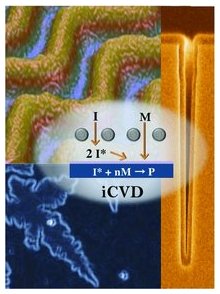
<content:encoded><![CDATA[<p><img src="http://www.wiley-vch.de/img/news/Trend_214_4_Gleason.jpg" alt="TREND: Chemical Vapor Deposition for Solvent-Free Polymerization at Surfaces" align="left" hspace="5" vspace="5" border="0" /></p><i>Jose Luis Yagüe, Anna Maria Coclite, Christy Petruczok, Karen K. Gleason*</i><br><br>Initiated chemical vapor deposition (iCVD) polymerization is a very elegant technique for designing new patterns and tuning the chemistry available on any kind of surface. These polymers attract considerable attention in many different fields of application. This trends article highlights the latest achievements in the fabrication of new surfaces and functional materials via iCVD and presents significant insights in its scale-up process. <br><br><a href="http://doi.wiley.com/10.1002/macp.201200600" target="_blank"><i>Macromol. Chem. Phys.</i>, DOI: 10.1002/macp.201200600</a>]]></content:encoded>
</item>
<item rdf:about="http://onlinelibrary.wiley.com/journal/10.1002/(ISSN)1521-3935/homepage/news/18285.en.html">
<title>TALENT: Renewable Polyols for Polyurethane Synthesis via Thiol-ene/yne Couplings of Plant Oils</title>
<link>http://onlinelibrary.wiley.com/journal/10.1002/(ISSN)1521-3935/homepage/news/18285.en.html</link>
<dc:date>2012-11-27T00:00:00+01:00</dc:date>
<content:encoded><![CDATA[<p><img src="http://www.wiley-vch.de/img/news/Talent_214_2_Lligadas.jpg" alt="TALENT: Renewable Polyols for Polyurethane Synthesis via Thiol-ene/yne Couplings of Plant Oils" align="left" hspace="5" vspace="5" border="0" /></p><i>Gerard Lligadas</i><br><br>Nowadays, the utilization of chemicals derived from renewable feedstock is in the spotlight of the polymeric industry. Plant oils and derivatives are important platform chemicals due to their amazing chemical versatility. Herein, these materials together with thiol-ene/yne couplings are presented as a perfect ecofriendly combination to prepare hydroxyl building blocks for polyurethane technology. <br><br><a href="http://doi.wiley.com/10.1002/macp.201200582" target="_blank"><i>Macromol. Chem. Phys.</i>, DOI: 10.1002/macp.201200582</a>]]></content:encoded>
</item>
<item rdf:about="http://onlinelibrary.wiley.com/journal/10.1002/(ISSN)1521-3935/homepage/news/18250.en.html">
<title>TREND: Thieno[3,4-c]pyrrole-4,6-dione-Based Polymers for Optoelectronic Applications</title>
<link>http://onlinelibrary.wiley.com/journal/10.1002/(ISSN)1521-3935/homepage/news/18250.en.html</link>
<dc:date>2012-11-21T00:00:00+01:00</dc:date>
<content:encoded><![CDATA[<p><img src="http://www.wiley-vch.de/img/news/Trend_214_3_Leclerc.jpg" alt="TREND: Thieno[3,4-c]pyrrole-4,6-dione-Based Polymers for Optoelectronic Applications" align="left" hspace="5" vspace="5" border="0" /></p><i>Agnieszka Pron, Philippe Berrouard, Mario Leclerc*</i><br><br>Recently, pushpull type conjugated polymers consisting of thieno[3,4-c]pyrrole-4,6-dione (TPD) motif as an electron-deficient moiety gained a lot of attention for applications in plastic electronics. For instance, incorporation of TPD-based polymers into bulk heterojunction (BHJ) solar cells resulted in devices with power conversion efficiency (PCE) up to 8.5%. This Trend Article summarizes current research on such TPD-based polymers with special emphasis on structureproperty relationships. <br><br><a href="http://doi.wiley.com/10.1002/macp.201200549" target="_blank"><i>Macromol. Chem. Phys.</i>, DOI: 10.1002/macp.201200549</a>]]></content:encoded>
</item>
<item rdf:about="http://onlinelibrary.wiley.com/journal/10.1002/(ISSN)1521-3935/homepage/news/18131.en.html">
<title>TALENT: New Applications of Photolabile Nitrobenzyl Groups in Polymers</title>
<link>http://onlinelibrary.wiley.com/journal/10.1002/(ISSN)1521-3935/homepage/news/18131.en.html</link>
<dc:date>2012-10-24T00:00:00+02:00</dc:date>
<content:encoded><![CDATA[<p><img src="http://www.wiley-vch.de/img/news/Talent_212_24_Thomas.jpg" alt="TALENT: New Applications of Photolabile Nitrobenzyl Groups in Polymers" align="left" hspace="5" vspace="5" border="0" /></p><i>Samuel W. Thomas III</i><br><br>New approaches to photoresponsive materials with nitrobenzyl esters are described using conjugated polymers and polyelectrolyte multilayer films that respond to UV light. Photocleavage of cations from polyelectrolytes in layer-by-layer (LbL) films disrupts their integrity, while conjugated materials with nitrobenzyl pendants show photochemically controlled fluorescence efficiency and solubility. <br><br><a href="http://doi.wiley.com/10.1002/macp.201200486" target="_blank"><i>Macromol. Chem. Phys.</i>, DOI: 10.1002/macp.201200486</a>]]></content:encoded>
</item>
<item rdf:about="http://onlinelibrary.wiley.com/journal/10.1002/(ISSN)1521-3935/homepage/news/18124.en.html">
<title>TALENT: Polymers as Probes for Multimodal Imaging with MRI</title>
<link>http://onlinelibrary.wiley.com/journal/10.1002/(ISSN)1521-3935/homepage/news/18124.en.html</link>
<dc:date>2012-10-23T00:00:00+02:00</dc:date>
<content:encoded><![CDATA[<p><img src="http://www.wiley-vch.de/img/news/Talent_212_24_Thurecht.jpg" alt="TALENT: Polymers as Probes for Multimodal Imaging with MRI" align="left" hspace="5" vspace="5" border="0" /></p><i>Kristofer J. Thurecht</i><br><br>Polymeric systems are an ideal platform for developing multimodal molecular imaging agents due to the ability to tailor their chemo-physical properties. Polymers facilitate marrying imaging modalities that provide high resolution such as MRI, with highly sensitive modalities such as positron emission tomography or fluorescence, through manipulation of the chemical structure of the macromolecules. <br><br><a href="http://doi.wiley.com/10.1002/macp.201200420" target="_blank"><i>Macromol. Chem. Phys.</i>, DOI: 10.1002/macp.201200420</a>]]></content:encoded>
</item>
<item rdf:about="http://onlinelibrary.wiley.com/journal/10.1002/(ISSN)1521-3935/homepage/news/18117.en.html">
<title>TREND: Bioinspired Microorigami by Self-Folding Polymer Films</title>
<link>http://onlinelibrary.wiley.com/journal/10.1002/(ISSN)1521-3935/homepage/news/18117.en.html</link>
<dc:date>2012-08-31T00:00:00+02:00</dc:date>
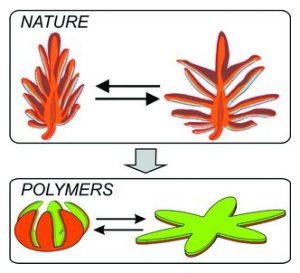
<content:encoded><![CDATA[<p><img src="http://www.wiley-vch.de/img/news/Trend_214_3_Ionov.jpg" alt="TREND: Bioinspired Microorigami by Self-Folding Polymer Films" align="left" hspace="5" vspace="5" border="0" /></p><i>Leonid Ionov</i><br><br>Recent advances in the development and application of biomimetic self-folding polymer films, which mimic natural mechanisms of movement and form complex 3D structures, are discussed in this manuscript.<br><br><a href="http://doi.wiley.com/10.1002/macp.201200246" target="_blank"><i>Macromol. Chem. Phys.</i>, DOI: 10.1002/macp.201200246</a>]]></content:encoded>
</item>
<item rdf:about="http://onlinelibrary.wiley.com/journal/10.1002/(ISSN)1521-3935/homepage/news/17844.en.html">
<title>TREND: Combinations of Elements: a New Paradigm for Fire Retardancy</title>
<link>http://onlinelibrary.wiley.com/journal/10.1002/(ISSN)1521-3935/homepage/news/17844.en.html</link>
<dc:date>2012-08-28T00:00:00+02:00</dc:date>
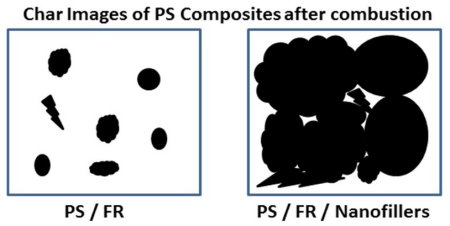
<content:encoded><![CDATA[<p><img src="http://www.wiley-vch.de/img/news/Trend_213_19_Wilkie.jpg" alt="TREND: Combinations of Elements: a New Paradigm for Fire Retardancy" align="left" hspace="5" vspace="5" border="0" /></p><i>Thirumal Mariappan, Charles A. Wilkie*</i><br><br>The presence of a nanodimensional material, together with a conventional fire retardant, leads to increased char formation and better fire retardancy. <br><br><a href="http://doi.wiley.com/10.1002/macp.201200363" target="_blank"><i>Macromol. Chem. Phys.</i>, DOI: 10.1002/macp.201200363</a>]]></content:encoded>
</item>
<item rdf:about="http://onlinelibrary.wiley.com/journal/10.1002/(ISSN)1521-3935/homepage/news/18104.en.html">
<title>TREND: Emergence of Polymer Stereocomplexes for Biomedical Applications</title>
<link>http://onlinelibrary.wiley.com/journal/10.1002/(ISSN)1521-3935/homepage/news/18104.en.html</link>
<dc:date>2012-08-10T00:00:00+02:00</dc:date>
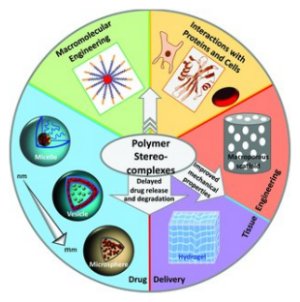
<content:encoded><![CDATA[<p><img src="http://www.wiley-vch.de/img/news/Trend_213_22_Bertin.jpg" alt="TREND: Emergence of Polymer Stereocomplexes for Biomedical Applications" align="left" hspace="5" vspace="5" border="0" /></p><i>Annabelle Bertin</i><br><br>Stereocomplexes of polylactide and poly(methyl methacrylate) are poised to have a big impact in the biomedical field because they offer improved properties and additional possibilities compared to the individual polymers in terms of tunable drug release and degradation rate as well as mechanical strength, not to mention their potential in terms of engineering of macromolecular constructs and surfaces. <br><br><a href="http://doi.wiley.com/10.1002/macp.201200143" target="_blank"><i>Macromol. Chem. Phys.</i>, DOI: 10.1002/macp.201200143</a>]]></content:encoded>
</item>
<item rdf:about="http://onlinelibrary.wiley.com/journal/10.1002/(ISSN)1521-3935/homepage/news/17504.en.html">
<title>TREND: Chemical Routes Toward Multicompartment Colloids</title>
<link>http://onlinelibrary.wiley.com/journal/10.1002/(ISSN)1521-3935/homepage/news/17504.en.html</link>
<dc:date>2012-06-26T00:00:00+02:00</dc:date>
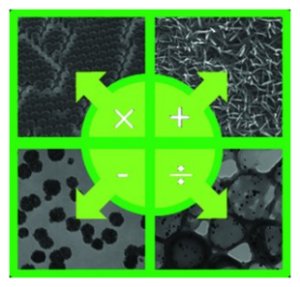
<content:encoded><![CDATA[<p><img src="http://www.wiley-vch.de/img/news/Trend_213_06_Crespy.jpg" alt="TREND: Chemical Routes Toward Multicompartment Colloids" align="left" hspace="5" vspace="5" border="0" /></p><i>Daniel Crespy,* Roland Hinrich Staff, Tanja Becker, Katharina Landfester</i><br><br>Complex colloidal structures can be elaborated via a cornucopia of synthetic pathways. The different routes are classified in: assembly of colloids, synthesis with the use of sacrificial templates, and internal phase separation in colloidal droplets. A tentative analogy between the basic arithmetic operations and these routes is proposed.<br><br><a href="http://doi.wiley.com/10.1002/macp.201200124" target="_blank"><i>Macromol. Chem. Phys.</i>, DOI: 10.1002/macp.201200124</a>]]></content:encoded>
</item>
<item rdf:about="http://onlinelibrary.wiley.com/journal/10.1002/(ISSN)1521-3935/homepage/news/17497.en.html">
<title>Functional Polymers: Metal-Free and Metallated Polymers: Properties and Photovoltaic Performance</title>
<link>http://onlinelibrary.wiley.com/journal/10.1002/(ISSN)1521-3935/homepage/news/17497.en.html</link>
<dc:date>2012-06-26T00:10:00+02:00</dc:date>
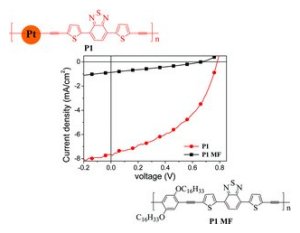
<content:encoded><![CDATA[<p><img src="http://www.wiley-vch.de/img/news/functpolym_213_13_1_Wong.jpg" alt="Functional Polymers: Metal-Free and Metallated Polymers: Properties and Photovoltaic Performance" align="left" hspace="5" vspace="5" border="0" /></p><i>A. Ng, C.-L. Ho, M. K. Fung, Y. C. Sun, S.-Y. Shao, Y.-Y. Fu, A. M. C. Ng, C. H. Li, W. K. Cheung, Y. H. Leung, A. B. Djurisic,* Q. Wang, Z. He, X. Wang, W.-K. Chan, Z.-Y. Xie,* J. A. Zapien, C. H. To, W.-Y. Wong*</i><br><br>Optical and photovoltaic properties of Pt-containing and metal-free polymers with similar structures are investigated. It is found that incorporation of metal results not only in an additional absorption band but also results in changes in the film morphology and phase separation, and hence a significant improvement in the photovoltaic performance. <br><br><a href="http://doi.wiley.com/10.1002/macp.201100686" target="_blank"><i>Macromol. Chem. Phys.</i>, DOI: 10.1002/macp.201100686</a>]]></content:encoded>
</item>
<item rdf:about="http://onlinelibrary.wiley.com/journal/10.1002/(ISSN)1521-3935/homepage/news/16903.en.html">
<title>TREND: Beyond Orientation: The Impact of Electric Fields on Block Copolymers</title>
<link>http://onlinelibrary.wiley.com/journal/10.1002/(ISSN)1521-3935/homepage/news/16903.en.html</link>
<dc:date>2012-02-13T00:00:00+01:00</dc:date>
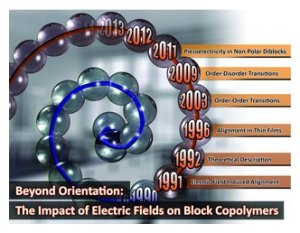
<content:encoded><![CDATA[<p><img src="http://www.wiley-vch.de/img/news/Trend_213_03_Boeker.jpg" alt="TREND: Beyond Orientation: The Impact of Electric Fields on Block Copolymers" align="left" hspace="5" vspace="5" border="0" /></p><i>Clemens Liedel, Christian W. Pester, Markus Ruppel, Volker S. Urban, Alexander Böker*</i><br><br>Since 1991, electric fields have been shown to strongly affect block copolymer structures. Aside from alignment, morphological distortions, orderorder, and orderdisorder transitions have been described both in bulk and thin films. Important findings of the last two decades are summarized and perspectives for future progress in the field of block copolymers in electric fields are outlined. <br><br><a href="http://doi.wiley.com/10.1002/macp.201100590" target="_blank"><i>Macromol. Chem. Phys.</i>, DOI: 10.1002/macp.201100590</a>]]></content:encoded>
</item>
<item rdf:about="http://onlinelibrary.wiley.com/journal/10.1002/(ISSN)1521-3935/homepage/news/16741.en.html">
<title>TREND: Current Trends in the Field of Self-Healing Materials</title>
<link>http://onlinelibrary.wiley.com/journal/10.1002/(ISSN)1521-3935/homepage/news/16741.en.html</link>
<dc:date>2012-01-18T00:00:00+01:00</dc:date>
<content:encoded><![CDATA[<p><img src="http://www.wiley-vch.de/img/news/Trend_213_02_Barner-Kowollik.jpg" alt="TREND: Current Trends in the Field of Self-Healing Materials" align="left" hspace="5" vspace="5" border="0" /></p><i>Nathalie K. Guimard, Kim K. Oehlenschlaeger, Jiawen Zhou, Stefan Hilf, Friedrich Georg Schmidt,* Christopher Barner-Kowollik*</i><br><br>The development of self-healing materials has become of increasing interest to material scientists in the last 20 years, given the extraordinary advantages that such systems offer in a wide range of applications. The design of an optimal self-healing material depends on many factors, including material application, stability, and production cost. <br><br><a href="http://doi.wiley.com/10.1002/macp.201100442" target="_blank"><i>Macromol. Chem. Phys.</i>, DOI: 10.1002/macp.201100442</a>]]></content:encoded>
</item>
<item rdf:about="http://onlinelibrary.wiley.com/journal/10.1002/(ISSN)1521-3935/homepage/news/15936.en.html">
<title>Functional Polymers: Enhanced Performance for Polymer Solar Cells by Using Surfactant-Modified PEDOT:PSS as the Anode Buffer Layer</title>
<link>http://onlinelibrary.wiley.com/journal/10.1002/(ISSN)1521-3935/homepage/news/15936.en.html</link>
<dc:date>2011-07-12T00:00:00+02:00</dc:date>
<content:encoded><![CDATA[<p><img src="http://www.wiley-vch.de/img/news/functpolym_212_17_2_Xie.jpg" alt="Functional Polymers: Enhanced Performance for Polymer Solar Cells by Using Surfactant-Modified PEDOT:PSS as the Anode Buffer Layer" align="left" hspace="5" vspace="5" border="0" /></p><i>G. Fang, S. Wu, Z. Xie,* Y. Geng, L. Wang</i><br><br>A modified PEDOT:PSS is prepared by doping with a small amount of cationic surfactant of CTAB. XPS results show the insulating PSS enrichment on the top surface of the PEDOT:PSS layer is restrained by this doping. By using the CTAB-modified PEDOT:PSS instead of PEDOT:PSS as the anode buffer layer, the power conversion efficiency of the P3HT:PCBM bulk heterojunction solar cells is increased about 50% and an efficiency of 4.4% is achieved. <br><br><a href="http://doi.wiley.com/10.1002/macp.201100102" target="_blank"><i>Macromol. Chem. Phys.</i>, DOI: 10.1002/macp.201100102</a>]]></content:encoded>
</item>
<item rdf:about="http://onlinelibrary.wiley.com/journal/10.1002/(ISSN)1521-3935/homepage/news/15929.en.html">
<title>Functional Polymers: Anthraquinone-Imide-Based Dimers: Synthesis, Piezochromism, Liquid Crystalline and Near-Infrared Electrochromic Properties</title>
<link>http://onlinelibrary.wiley.com/journal/10.1002/(ISSN)1521-3935/homepage/news/15929.en.html</link>
<dc:date>2011-07-12T00:10:00+02:00</dc:date>
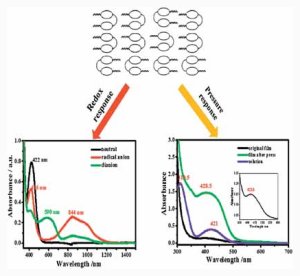
<content:encoded><![CDATA[<p><img src="http://www.wiley-vch.de/img/news/functpolym_212_17_1_Wan.jpg" alt="Functional Polymers: Anthraquinone-Imide-Based Dimers: Synthesis, Piezochromism, Liquid Crystalline and Near-Infrared Electrochromic Properties" align="left" hspace="5" vspace="5" border="0" /></p><i>F. Chen, J. Zhang, X. Wan*</i><br><br>A series of anthraquinone-imide-based liquid crystalline dimers with different siloxane spacers present redox activities, exhibiting intense near-infrared absorption upon reduction to radical anionic states. External pressure responsive color changes are also observed and measured. <br><br><a href="http://doi.wiley.com/10.1002/macp.201100065" target="_blank"><i>Macromol. Chem. Phys.</i>, DOI: 10.1002/macp.201100065</a>]]></content:encoded>
</item>
<item rdf:about="http://onlinelibrary.wiley.com/journal/10.1002/(ISSN)1521-3935/homepage/news/15727.en.html">
<title>TALENT: Novel Controlled Polymerization of Cyclo-olefins, Dienes, and Trienes by Utilizing Reaction Properties of Late Transition Metals</title>
<link>http://onlinelibrary.wiley.com/journal/10.1002/(ISSN)1521-3935/homepage/news/15727.en.html</link>
<dc:date>2011-05-25T00:00:00+02:00</dc:date>
<content:encoded><![CDATA[<p><img src="http://www.wiley-vch.de/img/news/Talent_212_15_Takeuchi.jpg" alt="TALENT: Novel Controlled Polymerization of Cyclo-olefins, Dienes, and Trienes by Utilizing Reaction Properties of Late Transition Metals" align="left" hspace="5" vspace="5" border="0" /></p><i>Daisuke Takeuchi</i><br><br>Diimine Pd complexes promote polymerization of cyclopentenes, non-conjugated dienes, and trienes to produce polymers with controlled structure. The polymers show characteristic properties including thermoreversible gelation and liquid crystalline formation. Diimine Ni complexes bring about cyclopolymerization of diallylfluorene to yield polymers containing five- and/or six-membered rings in controlled stereochemistry. <br><br><a href="http://doi.wiley.com/10.1002/macp.201100182" target="_blank"><i>Macromol. Chem. Phys.</i>, DOI: 10.1002/macp.201100182</a>]]></content:encoded>
</item>
<item rdf:about="http://onlinelibrary.wiley.com/journal/10.1002/(ISSN)1521-3935/homepage/news/15656.en.html">
<title>Functional Polymers: Synthesis and photovoltaic properties of a poly(2,7-carbazole) derivative based on dithienosilole and benzothiadiazole</title>
<link>http://onlinelibrary.wiley.com/journal/10.1002/(ISSN)1521-3935/homepage/news/15656.en.html</link>
<dc:date>2011-05-11T00:00:00+02:00</dc:date>
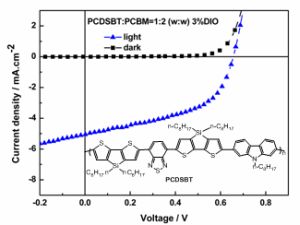
<content:encoded><![CDATA[<p><img src="http://www.wiley-vch.de/img/news/functpolym_212_11_1_Chen.jpg" alt="Functional Polymers: Synthesis and photovoltaic properties of a poly(2,7-carbazole) derivative based on dithienosilole and benzothiadiazole" align="left" hspace="5" vspace="5" border="0" /></p><i>J. Zhou, X. Wan*, Y. Liu, F. Wang, G. Long, C. Li, Y. Chen*</i><br><br>A poly(2,7-carbazole) derivative with dithienosilole and benzothiadiazole is designed and synthesized via Stille polymerization. Due to the incorporated dithienosilole and carbazole moieties the polymer shows a broad absorption from 350 to 800 nm and a relatively low HOMO level. Applied in solar cell devices a power conversion efficiency of 1.65% is achieved for this polymer blended with [6,6]-phenyl-C<sub>61</sub>-butyric acid methyl ester (PC<sub>61</sub>BM) when 1,8-diiodooctane is used as an additive. <br><br><a href="http://doi.wiley.com/10.1002/macp.201100060" target="_blank"><i>Macromol. Chem. Phys.</i>, DOI: 10.1002/macp.201100060</a>]]></content:encoded>
</item>
<item rdf:about="http://onlinelibrary.wiley.com/journal/10.1002/(ISSN)1521-3935/homepage/news/15603.en.html">
<title>TREND: Externally Induced Thermal Actuation of Polymer Nanocomposites</title>
<link>http://onlinelibrary.wiley.com/journal/10.1002/(ISSN)1521-3935/homepage/news/15603.en.html</link>
<dc:date>2011-05-03T00:00:00+02:00</dc:date>
<content:encoded><![CDATA[<p><img src="http://www.wiley-vch.de/img/news/Trend_212_10_Chen.jpg" alt="TREND: Externally Induced Thermal Actuation of Polymer Nanocomposites" align="left" hspace="5" vspace="5" border="0" /></p><i>Ying Hu, Wei Chen*</i><br><br>Thermally active polymers have attracted great attention because of the convenience and effectiveness of the thermal stimulation among the stimuli-responsive polymers. The trend article presents a brief overview of recent progress on externally induced thermal actuation of polymer nanocomposites, with emphasis on the influence of embedded nanomaterials which serve as "nanoantennas" and "nanoheaters" for harvesting and converting the external stimulus into thermal stimulation. <br><br><a href="http://doi.wiley.com/10.1002/macp.201100068" target="_blank"><i>Macromol. Chem. Phys.</i>, DOI: 10.1002/macp.201100068</a>]]></content:encoded>
</item>
<item rdf:about="http://onlinelibrary.wiley.com/journal/10.1002/(ISSN)1521-3935/homepage/news/15407.en.html">
<title>Functional Polymers: New blue light emitting polymers for polymer LEDs</title>
<link>http://onlinelibrary.wiley.com/journal/10.1002/(ISSN)1521-3935/homepage/news/15407.en.html</link>
<dc:date>2011-03-21T00:00:00+01:00</dc:date>
<content:encoded><![CDATA[<p><img src="http://www.wiley-vch.de/img/news/functpolym_212_5_1_Hsu.jpg" alt="Functional Polymers: New blue light emitting polymers for polymer LEDs" align="left" hspace="5" vspace="5" border="0" /></p><i>H.-M. Shih, C.-J. Lin, S.-R. Tseng, C.-H. Lin, C.-S. Hsu*</i><br><br>Polymer light emitting diodes (PLED) are attracting great interest because of their potential applications in full-color flat panel displays and in solid-state lighting. Of the three elemental colors, the materials for blue light emission remain problematic. Polyfluorenes (PFs) show promise as blue light emitting polymers due to their high photoluminescence (PL) quantum efficiency, and good thermal and chemical stability. However, PFs exhibit poor electroluminescence and color stability, due to their intermolecular aggregation of the polymer backbones, and the keto effect. As it is known that device performance improvements are possible by the incorporation of dopants in the polymer chains, in this study new anthracene-based blue-light-emitting polymers, where the dopants are covalently bonded to the polymer chain, are synthesized via a palladium-catalyzed Suzuki Polymerization.<br>They have a high photoluminescence quantum yield as well as good electrochemical properties, resulting in stable color and enhanced device performance. The double-layer and multilayer devices fabricated exhibit good performance. These results are recently published as part of the ongoing series on Functional Polymers - Luminogenic Polymers in Macromolecular Chemistry and Physics. <br><br><a href="http://doi.wiley.com/10.1002/macp.201000680" target="_blank"><i>Macromol. Chem. Phys.</i>, DOI: 10.1002/macp.201000680</a>]]></content:encoded>
</item>
<item rdf:about="http://onlinelibrary.wiley.com/journal/10.1002/(ISSN)1521-3935/homepage/news/15227.en.html">
<title>Functional Polymers: High-Mobility Conjugated Polymers Based on Fused-Thiophene Building Blocks</title>
<link>http://onlinelibrary.wiley.com/journal/10.1002/(ISSN)1521-3935/homepage/news/15227.en.html</link>
<dc:date>2011-02-22T00:00:00+01:00</dc:date>
<content:encoded><![CDATA[<p><img src="http://www.wiley-vch.de/img/news/functpolym_212_4_2_Zhan.jpg" alt="Functional Polymers: High-Mobility Conjugated Polymers Based on Fused-Thiophene Building Blocks" align="left" hspace="5" vspace="5" border="0" /></p><i>Yao Liu, Yunqi Liu,* Xiaowei Zhan*</i><br><br>Organic field-effect transistors (OFETs) are a promising cost-effective alternative to siliconbased field-effect transistors, and possess low-cost, light-weight, and flexibility advantages.<br>Conjugated polymers based on fused-thiophene building blocks have received considerable attention in the emerging field of organic electronics. In this review the most recent developments in conjugated polymers based on fused-thiophene rings for high-performance OFETs are summarized. The focus is on correlations of polymer chemical structures with properties, such as energy levels, filmforming property, film morphology, and OFET performance. This structure-property relationship analysis may guide rational structural design and evaluation of organic semiconductors. This article is additionally featured on <a href="http://www.materialsviews.com/details/news/1007395/Polymers_for_High-Performance_OFETs.html" target="_blank">MaterialsViews</a>.<br><br><a href="http://doi.wiley.com/10.1002/macp.201000677" target="_blank"><i>Macromol. Chem. Phys.</i>, DOI: 10.1002/macp.201000677</a>]]></content:encoded>
</item>
<item rdf:about="http://onlinelibrary.wiley.com/journal/10.1002/(ISSN)1521-3935/homepage/news/15220.en.html">
<title>TREND: What Morphologies Do We Want? - TEM Images from Dilute Diblock Copolymer Solutions</title>
<link>http://onlinelibrary.wiley.com/journal/10.1002/(ISSN)1521-3935/homepage/news/15220.en.html</link>
<dc:date>2011-02-22T00:10:00+01:00</dc:date>
<content:encoded><![CDATA[<p><img src="http://www.wiley-vch.de/img/news/Trend_212_7_Wu-Zhao.jpg" alt="TREND: What Morphologies Do We Want? - TEM Images from Dilute Diblock Copolymer Solutions" align="left" hspace="5" vspace="5" border="0" /></p><i>Hong Zhao, Qianjin Chen, Liangzhi Hong, Lei Zhao, Jianfang Wang, Chi Wu*</i><br><br>Various exotic morphologies of block copolymers in solutions have been reported only based on TEM imaging. Do they really exist in solutions or are they just some kinetically frozen structures formed during the TEM sample preparation? Fairly speaking, more and more people realize that it is necessary to use cryo-TEM to ascertain different morphologies of block copolymers in solutions. However, when a modern cryo-TEM is not accessible, a combination of different methods, such as LLS, freeze-drying, and TEM should be used. <br>This Trend Article is addtionally featured on <a href="http://www.materialsviews.com/details/news/1044999/Do_Exotic_Block_Copolymer_Morphologies_Really_Exist.html" target="_blank">MaterialsViews</a>.<br><br><a href="http://doi.wiley.com/10.1002/macp.201000696" target="_blank"><i>Macromol. Chem. Phys.</i>, DOI: 10.1002/macp.201000696</a>]]></content:encoded>
</item>
<item rdf:about="http://onlinelibrary.wiley.com/journal/10.1002/(ISSN)1521-3935/homepage/news/15160.en.html">
<title>Functional Polymers: Functionalization of Graphene Sheets by Polyacetylene: Convenient Synthesis and Enhanced Emission</title>
<link>http://onlinelibrary.wiley.com/journal/10.1002/(ISSN)1521-3935/homepage/news/15160.en.html</link>
<dc:date>2011-02-16T00:00:00+01:00</dc:date>
<content:encoded><![CDATA[<p><img src="http://www.wiley-vch.de/img/news/functpolym_212_4_4_Li.jpg" alt="Functional Polymers: Functionalization of Graphene Sheets by Polyacetylene: Convenient Synthesis and Enhanced Emission" align="left" hspace="5" vspace="5" border="0" /></p><i>X. Xu, Q. Luo, W. Lv, Y. Dong,* Y. Lin, Q. Yang,* A. Shen, D. Pang, J. Hu, J. Qin, Z. Li*</i><br><br>Taking advantage of nitrene chemistry, in particular the high reactivity, graphene moieties are successfully introduced into polyacetylenes to yield both the soluble and insoluble parts of polymer-graphene composites. Upon the attachment of graphene, the luminescence of the polyacetylenes is enhanced without affecting the electronic structure of graphene. These results are recently published as part of the ongoing series on Functional Polymers - Luminogenic Polymers in Macromolecular Chemistry and Physics. <br><br><a href="http://doi.wiley.com/10.1002/macp.201000608" target="_blank"><i>Macromol. Chem. Phys.</i>, DOI: 10.1002/macp.201000608</a>]]></content:encoded>
</item>
<item rdf:about="http://onlinelibrary.wiley.com/journal/10.1002/(ISSN)1521-3935/homepage/news/15134.en.html">
<title>Functional Polymers: Ruthenium complexes incorporated into conjugated polymers for Dye-Sensitized Solar Cells</title>
<link>http://onlinelibrary.wiley.com/journal/10.1002/(ISSN)1521-3935/homepage/news/15134.en.html</link>
<dc:date>2011-02-11T00:00:00+01:00</dc:date>
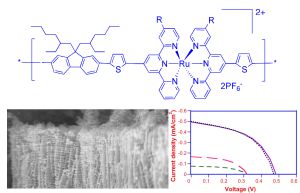
<content:encoded><![CDATA[<p><img src="http://www.wiley-vch.de/img/news/functpolym_212_4_3_Chan.jpg" alt="Functional Polymers: Ruthenium complexes incorporated into conjugated polymers for Dye-Sensitized Solar Cells" align="left" hspace="5" vspace="5" border="0" /></p><i>H. T. Chan, C. S. K. Mak, A. B. Djurisic, W. K. Chan*</i><br><br>The synthesis of two ruthenium terpyridine complexes containing conjugated polymers is reported and their application as photosensitizers in dye-sensitized solar cells (DSSC) based on TiO<sub>2</sub> nanoparticles and nanotubes was studied. The polymers were synthesized by the palladium-catalyzed coupling reaction between the ruthenium complex monomer and the fluorene-based comonomer.  Functionalization with a carboxylic acid group strongly facilitated the anchorage of polymer dye molecules on the electrode surface. The power conversion efficiencies of the DSSCs sensitized with polymers functionalized with carboxylic groups were in the range between 0.12 and 0.13%. It was found that DSSCs fabricated from TiO<sub>2</sub> nanoparticles and nanotubes substrates showed comparable performance.<br><br><a href="http://doi.wiley.com/10.1002/macp.201000589" target="_blank"><i>Macromol. Chem. Phys.</i>, DOI: 10.1002/macp.201000589</a>]]></content:encoded>
</item>
<item rdf:about="http://onlinelibrary.wiley.com/journal/10.1002/(ISSN)1521-3935/homepage/news/15013.en.html">
<title>Functional Polymers: Liquid-Crystalline Conjugated Polymers</title>
<link>http://onlinelibrary.wiley.com/journal/10.1002/(ISSN)1521-3935/homepage/news/15013.en.html</link>
<dc:date>2011-01-18T00:00:00+01:00</dc:date>
<content:encoded><![CDATA[<p><img src="http://www.wiley-vch.de/img/news/functpolym_212_1_2_Chen.jpg" alt="Functional Polymers: Liquid-Crystalline Conjugated Polymers" align="left" hspace="5" vspace="5" border="0" /></p><i>L. Chen,* Y. Chen,* D. Zhou, F. Li, D. Zha, K. Yao</i><br><br>Introducing anisotropic properties into conjugated polymers by the incorporation of liquid crystals may provide an interesting path to develop novel electronic and photonic devices. In this feature article the authors present the effects of structural variations of the conjugated polymer backbone and the pendant terphenyl moieties on the properties of the liquid-crystalline conjugated polymers. The mesogenic and chromophoric terphenyl core endows the polymers with high photoluminescence, enantiotropic mesophases and induced circular dichroism.<br><a href="http://doi.wiley.com/10.1002/macp.201000388" target="_blank"><i>Macromol. Chem. Phys.</i>, DOI: 10.1002/macp.201000388</a>]]></content:encoded>
</item>
<item rdf:about="http://onlinelibrary.wiley.com/journal/10.1002/(ISSN)1521-3935/homepage/news/14835.en.html">
<title>Functional Polymers: Highly Substituted Starburst Macromolecular Semiconductors</title>
<link>http://onlinelibrary.wiley.com/journal/10.1002/(ISSN)1521-3935/homepage/news/14835.en.html</link>
<dc:date>2010-12-15T00:00:00+01:00</dc:date>
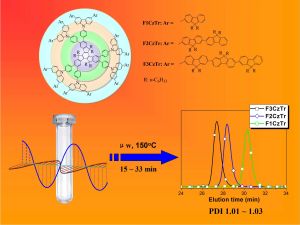
<content:encoded><![CDATA[<p><img src="http://www.wiley-vch.de/img/news/functpoly_212_4_1_Huang.jpg" alt="Functional Polymers: Highly Substituted Starburst Macromolecular Semiconductors" align="left" hspace="5" vspace="5" border="0" /></p><i>W.-Y. Lai,* D. Liu, W. Huang*</i><br><br>In order to combine the advantages of both uniformally structured oligomers and easily processable polymers the authors report a new strategy to synthezise π-conjugated organic semiconductors. Via a high yield microwave enhanced synthesis method for direct twelvefold Suzuki couplings a series of highly substituted twelve-armed macromolecules consisting of truxene, 9-phenylcarbazole and oligofluorene units were prepared. The resulting materials exhibited high purity, good monodispersity, and an extraordinary high molecular weight observed for a well-defined starburst conjugated molecule. Experiments to investigate the thermal, photophysical and electrochemical properties demonstrated the significance of constructing highly substituted starburst macromolecular structures on improving the amorphous properties and showed promising luminescence and electrochemical properties for the utilization of this class of materials in organic optoelectronics.<br><br><a href="http://doi.wiley.com/10.1002/macp.201000499" target="_blank"><i>Macromol. Chem. Phys.</i>, DOI: 10.1002/macp.201000499</a>]]></content:encoded>
</item>
<item rdf:about="http://onlinelibrary.wiley.com/journal/10.1002/(ISSN)1521-3935/homepage/news/14701.en.html">
<title>Functional Polymers: Solid-State Dye-Sensitized Solar Cells with Conjugated Polymers as Hole-Transporting Materials</title>
<link>http://onlinelibrary.wiley.com/journal/10.1002/(ISSN)1521-3935/homepage/news/14701.en.html</link>
<dc:date>2010-11-17T00:00:00+01:00</dc:date>
<content:encoded><![CDATA[<p><img src="http://www.wiley-vch.de/img/news/functpolym_211_24_1_Liu.jpg" alt="Functional Polymers: Solid-State Dye-Sensitized Solar Cells with Conjugated Polymers as Hole-Transporting Materials" align="left" hspace="5" vspace="5" border="0" /></p><i>W. Zhang, Y. Cheng, X. Yin, B. Liu*</i><br><br>In this Review the recent research on solid-state dye-sensitized TiO<sub>2</sub> solar cells with conjugated polymers as hole-transporting materials is presented. These photovoltaic devices combine the distinctive features of the inorganic semiconductor, i.e. chemical and mechanical stability, with polymer specific properties like easy processability and adjustable functionality. The authors especially focus on the impact of the molecular polymer structure and the deposition on the device performance. The factors limiting energy conversation efficiency are discussed and strategies for improving the device performance are proposed. <br><br><a href="http://doi.wiley.com/10.1002/macp.201000489" target="_blank"><i>Macromol. Chem. Phys.</i>, DOI: 10.1002/macp.201000489</a>]]></content:encoded>
</item>
<item rdf:about="http://onlinelibrary.wiley.com/journal/10.1002/(ISSN)1521-3935/homepage/news/14687.en.html">
<title>TALENT: Polymers for Control Freaks</title>
<link>http://onlinelibrary.wiley.com/journal/10.1002/(ISSN)1521-3935/homepage/news/14687.en.html</link>
<dc:date>2010-11-17T00:10:00+01:00</dc:date>
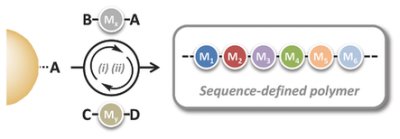
<content:encoded><![CDATA[<p><img src="http://www.wiley-vch.de/img/news/Talent_212_1_Hartmann.jpg" alt="TALENT: Polymers for Control Freaks" align="left" hspace="5" vspace="5" border="0" /></p><i>Laura Hartmann</i><br><br>Compared to biological polymers, most synthetic polymers utilized in medicine are often polydisperse in nature, statistically modified, and empirically optimized. Inherent distributions result in disperse structure-property relationships, which renders interpretation of the biological properties for such polymers difficult. Laura Hartmann presents in her Talent Article a novel synthetic strategy towards monodisperse, sequence-defined poly(amidoamine)s. Variations of the chemical structures are used to directly control the ability of such polycations to complex DNA and function as non-viral vectors. Her future work is expected to provide a deeper understanding of the interactions of fully synthetic with biological systems and using these interactions for the design of bioactive polymer-based materials.<br>This Talent Article is addtionally featured on <a href="http://www.materialsviews.com/details/news/875581/Polymers_for_Control_Freaks.html" target="_blank">MaterialsViews</a>.<br><br><a href="http://doi.wiley.com/10.1002/macp.201000479" target="_blank"><i>Macromol. Chem. Phys.</i>, DOI: 10.1002/macp.201000479</a>]]></content:encoded>
</item>
<item rdf:about="http://onlinelibrary.wiley.com/journal/10.1002/(ISSN)1521-3935/homepage/news/14565.en.html">
<title>Functional Polymers: Liquid crystalline additives improve the energy conversion efficiency of polymer solar cells</title>
<link>http://onlinelibrary.wiley.com/journal/10.1002/(ISSN)1521-3935/homepage/news/14565.en.html</link>
<dc:date>2010-10-26T00:00:00+02:00</dc:date>
<content:encoded><![CDATA[<p><img src="http://www.wiley-vch.de/img/news/functpolym_211_20_3_Kwak.jpg" alt="Functional Polymers: Liquid crystalline additives improve the energy conversion efficiency of polymer solar cells" align="left" hspace="5" vspace="5" border="0" /></p><i>S. Jeong, Y. Kwon, B.-D. Choi, G. Kwak*, Y. S. Han*</i><br><br>One of the most important obstacles in the commercial use of polymer solar cells is their low energy conversion efficiency. In [poly(3-hexylthiophene)]:[[6,6]-phenyl C<sub>61</sub>-butyric acid methyl ester] blend films nano-sized phase separation between the two materials proved to be the crucial feature to increase this value. Several attempts have been tried to realize this morphology. Among them, the additive technique is of high importance due to the simplicity of the phase separation on the nanoscale and the molecular structural ordering within these domains. The nematic liquid crystals 5CB and 8CB were incorporated as additives in the above mentioned polymer blend films and investigated in their application in polymer solar cells. The addition of the LC leads to an improved energy conversion efficiency of 3.72% (vs. 2.14% in the reference blend film without LC), which can be attributed to the increased absorbance, higher crystallinity of P3HT, larger domain size of PC<sub>61</sub>BM and enhanced electron/hole mobility. These results indicate that nematic liquid crystals can serve as processing additives to enhance the energy conversion efficiency of polymer solar cells without the need for post-thermal annealing of the polymer blend films.<br><br><a href="http://doi.wiley.com/10.1002/macp.201000379" target="_blank"><i>Macromol. Chem. Phys.</i>, DOI: 10.1002/macp.201000379</a>]]></content:encoded>
</item>
<item rdf:about="http://onlinelibrary.wiley.com/journal/10.1002/(ISSN)1521-3935/homepage/news/14558.en.html">
<title>Functional Polymers: Side-chain liquid-crystalline polymers for dye-sensitized solar-cells application</title>
<link>http://onlinelibrary.wiley.com/journal/10.1002/(ISSN)1521-3935/homepage/news/14558.en.html</link>
<dc:date>2010-10-26T00:10:00+02:00</dc:date>
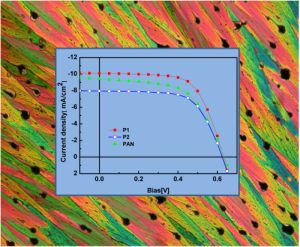
<content:encoded><![CDATA[<p><img src="http://www.wiley-vch.de/img/news/functpolym_211_20_2_Jin.jpg" alt="Functional Polymers: Side-chain liquid-crystalline polymers for dye-sensitized solar-cells application" align="left" hspace="5" vspace="5" border="0" /></p><i>J. S. Park, Y. H. Kim, M. Song, C.-H. Kim, M. A. Karim, J. W. Lee, Y.-S. Gal, P. Kumar, S.-W. Kang,* S.-H. Jin*</i><br><br>Dye-sensitized solar cells (DSSCs) have arisen tremendous interest as these devices can be produced in a facile and low-cost way for applications generating energy. However, the commonly incorporated liquid electrolytes cause potential problems i.e. leakage and volatilization of the organic solvents, which currently limits the long term stability of DSSCs. Solid and semi-solid substances are considered as an interesting alternative. For this purpose two side-chain liquid crystalline polymers were synthesized attaching the side-chains in a very controlled matter to the polymer backbone via click-chemistry. The new substances are incorporated as matrices for electrolytes in DSSCs. Eventhough the power conversion efficiency (4%) does not reach the performance of the liquid counterparts, a comparison with the non-liquid crystalline polymer polyacrylonitrile showed their improved photovoltaic performance. The authors attribute these observations to the liquid crystalline behavior, i.e. ion mobility and miscibility of the polymer-electrolyte components. These results are promising approaches for the development of new materials for enhanced DSSCs performance.<br><br><a href="http://doi.wiley.com/10.1002/macp.201000264" target="_blank"><i>Macromol. Chem. Phys.</i>, DOI: 10.1002/macp.201000264</a>]]></content:encoded>
</item>
<item rdf:about="http://onlinelibrary.wiley.com/journal/10.1002/(ISSN)1521-3935/homepage/news/14514.en.html">
<title>Functional Polymers: Polymers for Organic Electronics - third part of the series on functional polymers</title>
<link>http://onlinelibrary.wiley.com/journal/10.1002/(ISSN)1521-3935/homepage/news/14514.en.html</link>
<dc:date>2010-10-20T00:00:00+02:00</dc:date>
<content:encoded><![CDATA[<p><img src="http://www.wiley-vch.de/img/news/functpolym_211_20_1_WangTang.jpg" alt="Functional Polymers: Polymers for Organic Electronics - third part of the series on functional polymers" align="left" hspace="5" vspace="5" border="0" /></p><i>Wai-Yeung Wong,* Ben Zhong Tang* </i><br><br>"Beyond doubt Polymers for Organic Electronics is one of the hottest topics in the research area on advanced functional polymers" the guest-editors B. Z. Tang and W.-Y. Wong state in their essay  introducing the third part of the series on functional polymers dedicated to polymers in organic electronics. Due to increasing energy prices there is an immense need for improved energy conversion technologies. Great effort is therefore spent into new materials for polymer solar cells, polymer light-emitting diodes, and polymer field-effect transistors. The guest-editors hope that this series will provide a forum to highlight recent developments as well as a strong motivation for further research on this fascinating topic.<br><br><a href="http://doi.wiley.com/10.1002/macp.201000549" target="_blank"><i>Macromol. Chem. Phys.</i>, DOI: 10.1002/macp.201000549</a>]]></content:encoded>
</item>
<item rdf:about="http://onlinelibrary.wiley.com/journal/10.1002/(ISSN)1521-3935/homepage/news/14256.en.html">
<title>TREND: Optical Probes of Charge Generation and Recombination in Bulk Heterojunction Organic Solar Cells</title>
<link>http://onlinelibrary.wiley.com/journal/10.1002/(ISSN)1521-3935/homepage/news/14256.en.html</link>
<dc:date>2010-09-08T00:00:00+02:00</dc:date>
<content:encoded><![CDATA[<p><img src="http://www.wiley-vch.de/img/news/Trend_211_19_Laquai.jpg" alt="TREND: Optical Probes of Charge Generation and Recombination in Bulk Heterojunction Organic Solar Cells" align="left" hspace="5" vspace="5" border="0" /></p><i>Ian A. Howard, Frédéric Laquai*</i><br><br>Understanding the principles of charge generation and recombination in organic solar cells is a prerequisite for future material development and device optimization. Optical probes, especially transient absorption spectroscopy, are valuable tools to study the dynamics of excited states such as excitons and charges, over a wide-range of timescales. New insights from recent studies may help to guide the future material development without having to rely on entirely empirical strategies for device optimization. <br><br><a href="http://doi.wiley.com/10.1002/macp.201000353" target="_blank"><i>Macromol. Chem. Phys.</i> <b>2010</b>, DOI: 10.1002/macp.201000353</a>]]></content:encoded>
</item>
<item rdf:about="http://onlinelibrary.wiley.com/journal/10.1002/(ISSN)1521-3935/homepage/news/14219.en.html">
<title>Functional Polymers: Liquid crystalline polymers with tunable photoluminescence color and polarized light emission</title>
<link>http://onlinelibrary.wiley.com/journal/10.1002/(ISSN)1521-3935/homepage/news/14219.en.html</link>
<dc:date>2010-09-07T00:00:00+02:00</dc:date>
<content:encoded><![CDATA[<p><img src="http://www.wiley-vch.de/img/news/functpolym_211_16_2_Kawatsuki.jpg" alt="Functional Polymers: Liquid crystalline polymers with tunable photoluminescence color and polarized light emission" align="left" hspace="5" vspace="5" border="0" /></p><i>Nobuhiro Kawatsuki,* Ryoichi Ando, Ryosuke Ishida, Mizuho Kondo, and Yuta Minami</i><br><br>N. Kawatsuki et al. present their results on tunable photoluminescent color and polarized light emission of fluorene derivatives reversibly embedded into a liquid crystalline polymer. The fluorene derivatives possess terminal pyridine rings and are able to form H-bonds to the side-on attached cinnamic acid moieties of the polymer thus varying the photoluminescence properties. Additionally, cinnamic acid changes its acidity when undergoing a [2 + 2] photo crosslinking reaction; hence the acidity of the material can be controlled via the degree of photoreaction. As the λ<sub>max</sub> of the photoluminescence depends on the extent of formed H-bonds correlating to the acidity of the material it can be tuned by the position of the N-atom in the pyridine as well as the degree of photoreaction of the cinnamic acid. The polymer bearing cinnamic acid side-groups can be employed as a photoalignment layer to obtain oriented materials possessing anisotropic photoluminescence. This behavior paves the way for applications in backlighting LC displays or polarized luminescent devices.<br><br><a href="http://doi.wiley.com/10.1002/macp.201000183" target="_blank"><i>Macromol. Chem. Phys.</i>, DOI: 10.1002/macp.201000183</a>]]></content:encoded>
</item>
<item rdf:about="http://onlinelibrary.wiley.com/journal/10.1002/(ISSN)1521-3935/homepage/news/13927.en.html">
<title>TREND: Contemporary Mass Spectrometry and the Analysis of Synthetic Polymers: Trends, Techniques and Untapped Potential</title>
<link>http://onlinelibrary.wiley.com/journal/10.1002/(ISSN)1521-3935/homepage/news/13927.en.html</link>
<dc:date>2010-07-06T00:00:00+02:00</dc:date>
<content:encoded><![CDATA[<p><img src="http://www.wiley-vch.de/img/news/Trend_211_14_Barner-Kowollik.jpg" alt="TREND: Contemporary Mass Spectrometry and the Analysis of Synthetic Polymers: Trends, Techniques and Untapped Potential" align="left" hspace="5" vspace="5" border="0" /></p><i>Gene Hart-Smith, Christopher Barner-Kowollik*</i><br><br>The current Trend article - written in an easily accessible tutorial style fashion - provides an introduction to the fundamental principles of polymer mass spectrometry from the ionisation process itself to the choice of mass analyser. In addition, selected applications are highlighted and commented upon. <br><br><a href="http://doi.wiley.com/10.1002/macp.201000107" target="_blank"><i>Macromol. Chem. Phys.</i> <b>2010</b>, DOI: 10.1002/macp.201000107</a>]]></content:encoded>
</item>
<item rdf:about="http://onlinelibrary.wiley.com/journal/10.1002/(ISSN)1521-3935/homepage/news/13934.en.html">
<title>Functional Polymers: New Thermoresponsive Luminescent Electrospun Nanofibers Prepared from Poly[2,7-(9,9-dihexylfluorene)]-block-poly(N-isopropylacrylamide)/PMMA Blends</title>
<link>http://onlinelibrary.wiley.com/journal/10.1002/(ISSN)1521-3935/homepage/news/13934.en.html</link>
<dc:date>2010-07-05T00:00:00+02:00</dc:date>
<content:encoded><![CDATA[<p><img src="http://www.wiley-vch.de/img/news/211_13_2_Chen.jpg" alt="Functional Polymers: New Thermoresponsive Luminescent Electrospun Nanofibers Prepared from Poly[2,7-(9,9-dihexylfluorene)]-block-poly(N-isopropylacrylamide)/PMMA Blends" align="left" hspace="5" vspace="5" border="0" /></p><i>Ping Tzeng, Chi-Ching Kuo, Sung-Tso Lin, Yu-Chen Chiu, Wen-Chang Chen*</i><br><br>Novel luminescent electrospun polymer nanofibers are successfully prepared via a two-fluid spinneret for thermo-tunable colorimetric sensor applications. PF-b-PNIPAAm/PMMA electrospun fibers exhibit both reversible temperature-responsive wettability and PF aggregate size changes as the temperature is cycled between 20 and 40 °C. <br><br><a href="http://doi.wiley.com/10.1002/macp.201000088" target="_blank"><i>Macromol. Chem. Phys.</i>, DOI: 10.1002/macp.201000088</a>]]></content:encoded>
</item>
<item rdf:about="http://onlinelibrary.wiley.com/journal/10.1002/(ISSN)1521-3935/homepage/news/13941.en.html">
<title>Functional Polymers: Synthesis and Characterization of Highly Luminescent Copolymers of Methyl Methacrylate and Eu-Complexed 5-Acryloxyethoxymethyl-8-hydroxyquinoline</title>
<link>http://onlinelibrary.wiley.com/journal/10.1002/(ISSN)1521-3935/homepage/news/13941.en.html</link>
<dc:date>2010-07-04T00:00:00+02:00</dc:date>
<content:encoded><![CDATA[<p><img src="http://www.wiley-vch.de/img/news/functpolym_211_1n_n_Li.jpg" alt="Functional Polymers: Synthesis and Characterization of Highly Luminescent Copolymers of Methyl Methacrylate and Eu-Complexed 5-Acryloxyethoxymethyl-8-hydroxyquinoline" align="left" hspace="5" vspace="5" border="0" /></p><i>Cun-Jin Xu, Bo-Geng Li*</i><br><br>A highly luminescent Eu-complex monomer featuring thenoyltrifluoroacetone and 5-acryloxyethoxymethyl-8-hydroxyquinoline was first designed and synthesized, which was then further copolymerized with methyl methacrylate to prepare Eu-containing copolymers. The copolymers exhibit typical intense luminescence of the Eu(III) ions even at low Eu content. Furthermore, these polymer luminophors can be cast into clear thin films with good thermal and moisture stable properties. <br><br><a href="http://doi.wiley.com/10.1002/macp.201000026" target="_blank"><i>Macromol. Chem. Phys.</i>, DOI: 10.1002/macp.201000026</a>]]></content:encoded>
</item>
<item rdf:about="http://onlinelibrary.wiley.com/journal/10.1002/(ISSN)1521-3935/homepage/news/13771.en.html">
<title>TALENT: Diels-Alder Cycloaddition-Cycloreversion: A Powerful Combo in Materials Design</title>
<link>http://onlinelibrary.wiley.com/journal/10.1002/(ISSN)1521-3935/homepage/news/13771.en.html</link>
<dc:date>2010-06-14T00:00:00+02:00</dc:date>
<content:encoded><![CDATA[<p><img src="http://www.wiley-vch.de/img/news/talent_211_13_sanyal.jpg" alt="TALENT: Diels-Alder Cycloaddition-Cycloreversion: A Powerful Combo in Materials Design" align="left" hspace="5" vspace="5" border="0" /></p><i>Amitav Sanyal</i><br><br>Incorporation of the reactive maleimide group into macromolecular structures enables the fabrication of thiol reactive polymeric materials. Until recently, challenge in preserving the maleimide group during synthetic manipulations such as polymerization has hampered the development of such materials. The Diels-Alder/retro Diels-Alder reaction combination offers a viable solution to this problem. Furthermore, the reaction combination also enables the design of thermoreversible materials. <br><br><a href="http://doi.wiley.com/10.1002/macp.201000108" target="_blank"><i>Macromol. Chem. Phys.</i> <b>2010</b>, DOI: 10.1002/macp.201000108</a>]]></content:encoded>
</item>
<item rdf:about="http://onlinelibrary.wiley.com/journal/10.1002/(ISSN)1521-3935/homepage/news/13516.en.html">
<title>Functional Polymers: With Electron Beam Lithography to Sub-Micrometer-Patterning of Conjugated Polymers</title>
<link>http://onlinelibrary.wiley.com/journal/10.1002/(ISSN)1521-3935/homepage/news/13516.en.html</link>
<dc:date>2010-04-13T00:00:00+02:00</dc:date>
<content:encoded><![CDATA[<p><img src="http://www.wiley-vch.de/img/news/functpolym_211_13_1_List.jpg" alt="Functional Polymers: With Electron Beam Lithography to Sub-Micrometer-Patterning of Conjugated Polymers" align="left" hspace="5" vspace="5" border="0" /></p><i>E. Fisslthaler, M. Sezen, H. Plank, A. Blümel, S. Sax, W. Grogger, and E. J. W. List*</i><br><br>Spin coating, the most common deposition method for polymers, is not suitable for the production of patterned devices. However, the fabrication of devices with sub-micrometer active device dimensions will, open new possibilities for fundamental studies and enable improvements in device performance. List and co-workers have therefore added an electron beam lithography step to the device fabrication process and by this could fabricate patterned light emitting polymer layers with features as small as 2 μm. The patterning technique can be applied for all types of conjugated materials and it could even be combined with a fast 'large scale' structuring methods like inkjet printing, to allow for refinement of these patterns on a micrometer scale.<br><br><a href="http://doi.wiley.com/10.1002/macp.200900665" target="_blank"><i>Macromol. Chem. Phys.</i>, DOI: 10.1002/macp.200900665</a>]]></content:encoded>
</item>
<item rdf:about="http://onlinelibrary.wiley.com/journal/10.1002/(ISSN)1521-3935/homepage/news/13444.en.html">
<title>TREND: Glycopolymers of Various Architectures - More than Mimicking Nature</title>
<link>http://onlinelibrary.wiley.com/journal/10.1002/(ISSN)1521-3935/homepage/news/13444.en.html</link>
<dc:date>2010-03-31T00:00:00+02:00</dc:date>
<content:encoded><![CDATA[<p><img src="http://www.wiley-vch.de/img/news/Trend_211_7_Voit.jpg" alt="TREND: Glycopolymers of Various Architectures - More than Mimicking Nature" align="left" hspace="5" vspace="5" border="0" /></p><i>Brigitte Voit,* Dietmar Appelhans</i><br><br>Carbohydrates have a highly important role in biological functions. The increasing understanding of their biological interactions has also triggered a strongly increased interest in the preparation of synthetic glycopolymers of various architectures and well-defined structure which can mimic biological functions in a less complex environment. In the last few years synthetic approaches in polymer science have been refined and newly developed in order to achieve complex carbohydrate architectures and to make use of them in various areas like glycomics, biotechnology, biosensors, and medicine.<br>Besides the use of especially controlled radical polymerization techniques, highly efficient polymer analogous reactions that can be carried out in aqueous media have been developed and applied to linear and dendritic macromolecules. Self assembly aspects and their effectiveness in biological functions have been assessed.<br><br><a href="http://doi.wiley.com/10.1002/macp.201000007" target="_blank"><i>Macromol. Chem. Phys.</i> <b>2009</b>, DOI: 10.1002/macp.201000007</a>]]></content:encoded>
</item>
<item rdf:about="http://onlinelibrary.wiley.com/journal/10.1002/(ISSN)1521-3935/homepage/news/13647.en.html">
<title>TREND: In situ Synthesis of Polymer/Clay Nanocomposites by Living and Controlled/Living Polymerization</title>
<link>http://onlinelibrary.wiley.com/journal/10.1002/(ISSN)1521-3935/homepage/news/13647.en.html</link>
<dc:date>2010-02-15T00:00:00+01:00</dc:date>
<content:encoded><![CDATA[<p><img src="http://www.wiley-vch.de/img/news/Trend_211_3_Yagci.jpg" alt="TREND: In situ Synthesis of Polymer/Clay Nanocomposites by Living and Controlled/Living Polymerization" align="left" hspace="5" vspace="5" border="0" /></p><i>Mehmet Atilla Tasdelen, Johannes Kreutzer, Yusuf Yagci*</i><br><br>The present trend article reports on the recent progress of the in situ synthesis of polymer/clay nanocomposites with well-defined structures and highly exfoliated morphologies. The methods used for the preparation are classified according to the individual polymerization mechanisms. Other possibilities such as multi-mode polymerization that combines different polymerization methods and click chemistry are also described. A special emphasis is devoted to the structures and morphologies of the obtained nanocomposites rather than their practical properties.<br><br><a href="http://doi.wiley.com/10.1002/macp.200900590" target="_blank"><i>Macromol. Chem. Phys.</i> <b>2010</b>, DOI: 10.1002/macp.200900590</a>]]></content:encoded>
</item>
<item rdf:about="http://onlinelibrary.wiley.com/journal/10.1002/(ISSN)1521-3935/homepage/news/13640.en.html">
<title>TREND: Organometallic-Mediated Radical Polymerization: Developing Well-Defined Complexes for Reversible Transition Metal-Alkyl Bond Homolysis</title>
<link>http://onlinelibrary.wiley.com/journal/10.1002/(ISSN)1521-3935/homepage/news/13640.en.html</link>
<dc:date>2010-01-15T00:00:00+01:00</dc:date>
<content:encoded><![CDATA[<p><img src="http://www.wiley-vch.de/img/news/Trend_211_1_Abd-El-Aziz.jpg" alt="TREND: Organometallic-Mediated Radical Polymerization: Developing Well-Defined Complexes for Reversible Transition Metal-Alkyl Bond Homolysis" align="left" hspace="5" vspace="5" border="0" /></p><i>Kevin M. Smith, W. Stephen McNeil, Alaa S. Abd-El-Aziz*</i><br><br>Organometallic-mediated radical polymerization (OMRP) has emerged as a powerful new class of living controlled radical polymerization. In order to fulfill its potential in the polymerization of vinyl acetate (VOAc) and other challenging monomers, the effects of ancillary ligands on the metal-alkyl bond dissociation energy in OMRP reagents must be thoroughly explored. Recent results investigating structure-activity relationships in well-defined cobalt, iron and chromium complexes will be discussed. The involvement of radical intermediates in oxidative addition of secondary alkyls for catalytic cross-coupling reactions catalyzed by first row transition metals will also be examined for relevant design concepts.<br><br><a href="http://doi.wiley.com/10.1002/macp.200900581" target="_blank"><i>Macromol. Chem. Phys.</i> <b>2010</b>, DOI: 10.1002/macp.200900581</a>]]></content:encoded>
</item>
<item rdf:about="http://onlinelibrary.wiley.com/journal/10.1002/(ISSN)1521-3935/homepage/news/12900.en.html">
<title>Functional Polymers: Luminescent Mechanochromic Sensors</title>
<link>http://onlinelibrary.wiley.com/journal/10.1002/(ISSN)1521-3935/homepage/news/12900.en.html</link>
<dc:date>2009-12-15T00:00:00+01:00</dc:date>
<content:encoded><![CDATA[<p><img src="http://www.wiley-vch.de/img/news/functpolym_211_1_2_Weder.jpg" alt="Functional Polymers: Luminescent Mechanochromic Sensors" align="left" hspace="5" vspace="5" border="0" /></p>Functional Polymers: Luminescent Mechanochromic Sensors<br><br><i>Joseph Lott and Christoph Weder*</i><br><br>Luminogenic polymers with stimuli-responsive properties can be prepared by incorporating small amounts of excimer forming sensor dyes into various host polymers. C. Weder and J. Lott produce luminogenic mechanochromic thin films by blending cyano-substituted excimer-forming oligo(phenylene vinylene) dyes with two fluorinated host polymers of similar chemical composition but different crystallinity. In agreement with previous findings, aggregate size and matrix crystallinity were shown to be important factors determining sensor performance. The underlying mechanism - dispersion of small aggregates of the excimer forming sensor molecules upon plastic deformation of polymer crystallites - can be exploited in a range of semicrystalline polymer hosts.<br><br><a href="http://doi.wiley.com/10.1002/macp.200900476" target="_blank"><i>Macromol. Chem. Phys.</i>, DOI: 10.1002/macp.200900476</a>]]></content:encoded>
</item>
<item rdf:about="http://onlinelibrary.wiley.com/journal/10.1002/(ISSN)1521-3935/homepage/news/12893.en.html">
<title>Functional Polymers: Copolymer of Fluorene and Triphenylamine Moieties as Chemosensor</title>
<link>http://onlinelibrary.wiley.com/journal/10.1002/(ISSN)1521-3935/homepage/news/12893.en.html</link>
<dc:date>2009-12-15T00:10:00+01:00</dc:date>
<content:encoded><![CDATA[<p><img src="http://www.wiley-vch.de/img/news/functpolym_211_1_1_Li.jpg" alt="Functional Polymers: Copolymer of Fluorene and Triphenylamine Moieties as Chemosensor" align="left" hspace="5" vspace="5" border="0" /></p><i>Rong Yang, Weibing Wu, Wenyu Wang, Zhen Li,* and Jingui Qin</i><br><br>Conjugated polymer-based fluorescent (CPF) sensors, which generally contain binding positions such as nitrogen, oxygen, and sulfur atoms to interact with different analytes to give detectable optical signals, have attracted much attention in recent years. Zhen Li and co-workers have successfully prepared a new imidazole-functionalized copolymer of fluorene and triphenylamine bearing imidazole groups in the side chain comparing the direct and postfunctional synthetic route, where the direct copolymeriztion strategy proved to be more successful. The chemosensing behavior of the obtained copolymer was carefully studied. The utilization of the metal ion chemosensors to probe anions by an indirect strategy presents a novel way of developing new chemosensors with a detection limit of cyanide down to 1.8 × 10<sup>-5</sup> mol⋅L<sup>-1</sup> (0.47 ppm).<br><br><a href="http://doi.wiley.com/10.1002/macp.200900370" target="_blank"><i>Macromol. Chem. Phys.</i>, DOI: 10.1002/macp.200900370</a>]]></content:encoded>
</item>
<item rdf:about="http://onlinelibrary.wiley.com/journal/10.1002/(ISSN)1521-3935/homepage/news/12662.en.html">
<title>Functional Polymers: Safe and Efficient Metallo-Polymers for PLEDs</title>
<link>http://onlinelibrary.wiley.com/journal/10.1002/(ISSN)1521-3935/homepage/news/12662.en.html</link>
<dc:date>2009-11-11T00:00:00+01:00</dc:date>
<content:encoded><![CDATA[<p><img src="http://www.wiley-vch.de/img/news/functpolym_210_21_2_Wong.jpg" alt="Functional Polymers: Safe and Efficient Metallo-Polymers for PLEDs" align="left" hspace="5" vspace="5" border="0" /></p><i>Cheuk-Lam Ho, Chung-Hin Chui,* Wai-Yeung Wong,* Shawkat M. Aly, Daniel Fortin, Pierre D. Harvey,* Bing Yao, Zhiyuan Xie, and Lixiang Wang</i><br><br>Although most of the work in this field of polymer light-emitting diodes (PLEDs) is focused on conjugated polymers that are comprised of organic building blocks,  the interest in the properties of organometallic conjugated materials is also growing. Wai-Yeung Wong and co-workers from the Hong Kong Baptist University present the molecular design and optoelectronic properties of a novel platinum(II)-acetylide polymer containing 2,7-carbazole units. The polymer has been used to fabricate efficient PLEDs which exhibit a strong green-yellow electrophosphorescence and displayed the best efficiency of 4.7cd⋅A<sup>-1</sup>.This study represents the first example of efficient PLEDs exhibiting neat triplet emission under electrical excitation for metallopolyynes. On top of this, biological studies show that the metallo-polymer is non-cytotoxic in vitro on liver and breast derived human cells at reasonable doses rendering it a safe and promising materials for practical devices.<br><br><a href="http://doi.wiley.com/10.1002/macp.200900351" target="_blank"><i>Macromol. Chem. Phys.</i>, DOI: 10.1002/macp.200900351</a>]]></content:encoded>
</item>
<item rdf:about="http://onlinelibrary.wiley.com/journal/10.1002/(ISSN)1521-3935/homepage/news/12654.en.html">
<title>Functional Polymers: A New Class of Heat-Resistant and Fluorescent Polymers</title>
<link>http://onlinelibrary.wiley.com/journal/10.1002/(ISSN)1521-3935/homepage/news/12654.en.html</link>
<dc:date>2009-11-11T00:10:00+01:00</dc:date>
<content:encoded><![CDATA[<p><img src="http://www.wiley-vch.de/img/news/functpolym_210_21_1_Matsumoto.jpg" alt="Functional Polymers: A New Class of Heat-Resistant and Fluorescent Polymers" align="left" hspace="5" vspace="5" border="0" /></p><i>Shotaro Yukawa, Akitoshi Omayu, and Akikazu Matsumoto*</i><br><br>Vinyl polymers with fluorescent chromophores in their side chain can be conveniently prepared by chain polymerizations, but they lack thermal stability as compared with heat-resistant condensation polymers. In analogy to the alternating copolymerization of N-alkylmaleimides (RMI) with isobutene (IB), which yields high-molecular-weight copolymers [poly(RMI-<i>alt</i>-IB)s] with excellent thermal stabilities, Akikazu Matsumoto and co-workers designed poly(RMI-<i>alt</i>-IB)s containing pyrenyl and alkynylpyrenyl moieties in the side chain. Due to their superior transparency and mechanical properties along with the excellent thermal stability these RMI-IB copolymers modified by a fluorophore in the side chain can be considered as the new type of heat-resistant and fluorescent polymers.<br><br><a href="http://doi.wiley.com/10.1002/macp.200900326" target="_blank"><i>Macromol. Chem. Phys.</i>, DOI: 10.1002/macp.200900326</a>]]></content:encoded>
</item>
<item rdf:about="http://onlinelibrary.wiley.com/journal/10.1002/(ISSN)1521-3935/homepage/news/12558.en.html">
<title>Functional Polymers: Polyfluorenes with Pure Blue Emission</title>
<link>http://onlinelibrary.wiley.com/journal/10.1002/(ISSN)1521-3935/homepage/news/12558.en.html</link>
<dc:date>2009-10-26T00:00:00+01:00</dc:date>
<content:encoded><![CDATA[<p><img src="http://www.wiley-vch.de/img/news/functpolym_210_19_2_Huang.jpg" alt="Functional Polymers: Polyfluorenes with Pure Blue Emission" align="left" hspace="5" vspace="5" border="0" /></p><i>Qiang Zhao, Shu-Juan Liu, and Wei Huang*</i><br><br>Due to their high photoluminescence quantum yields, charge-carrier mobility, and a good processibility polyfluorenes (PF) represent a class of promising polymers for the application in blue polymer light-emitting diodes (PLEDs). However, the appearance of long-wavelength green emission is a significant problem for this purpose. As a result, techniques for improving the color purity and stability of polyfluorenes are very important. In their Feature Article W. Huang and co-workers discuss the different routes they have gone to address this problem. Through various chemical approaches, including the incorporation of spirobifluorene units, heterofluorene units, hyperbranched, and starshaped structures into PF backbones, pure blue-emitting PFs with excellent color purity, and stability were obtained.<br><br><a href="http://doi.wiley.com/10.1002/macp.200900263" target="_blank"><i>Macromol. Chem. Phys.</i>, DOI: 10.1002/macp.200900263</a>]]></content:encoded>
</item>
<item rdf:about="http://onlinelibrary.wiley.com/journal/10.1002/(ISSN)1521-3935/homepage/news/12549.en.html">
<title>Functional Polymers: Poly(carbazole)-Based Copolymers for PLED Applications</title>
<link>http://onlinelibrary.wiley.com/journal/10.1002/(ISSN)1521-3935/homepage/news/12549.en.html</link>
<dc:date>2009-10-22T00:00:00+02:00</dc:date>
<content:encoded><![CDATA[<p><img src="http://www.wiley-vch.de/img/news/functpolym_210_19_1_Lee.jpg" alt="Functional Polymers: Poly(carbazole)-Based Copolymers for PLED Applications" align="left" hspace="5" vspace="5" border="0" /></p><i>Jin Su Park, Myungkwan Song, Sung-Ho Jin,* Jae Wook Lee,* Chan Woo Lee, and Yeong-Soon Gal</i><br><br>Polymer light-emitting diodes (PLEDs) exhibit many attractive properties, such as low driving voltage, a wide color range, low costs, flexibility and easy processing conditions. Among the π-conjugated polymers used for the production of PLEDs polymers containing carbazole or carbazole derivatives have attracted much attention due to their unique optical, electrical and chemical properties. J.-H. Jin, J. W. Lee and coworkers have synthesized a series of new carbazole-based π-conjugated copolymers incorporating a deep blue chromophore pendant group using the Suzuki coupling polymerization method. The resulting copolymers were found to be stable in air, and showed good solubility and high glass transition temperatures. This indicates that these copolymers are promising light-emitting materials. The maximum brightness and luminescence efficiency of the copolymer device were found to be 230 cd⋅m<sup>2</sup> and 0.28 cd⋅A<sup>1</sup> at 11V, respectively.<br><br><a href="http://doi.wiley.com/10.1002/macp.200900207" target="_blank"><i>Macromol. Chem. Phys.</i>, DOI: 10.1002/macp.200900207</a>]]></content:encoded>
</item>
<item rdf:about="http://onlinelibrary.wiley.com/journal/10.1002/(ISSN)1521-3935/homepage/news/12374.en.html">
<title>Functional Polymers: Selective Chemosensor for Group 8 Metal Ions</title>
<link>http://onlinelibrary.wiley.com/journal/10.1002/(ISSN)1521-3935/homepage/news/12374.en.html</link>
<dc:date>2009-09-25T00:00:00+02:00</dc:date>
<content:encoded><![CDATA[<p><img src="http://www.wiley-vch.de/img/news/functpolym_210_17_2_Stand.jpg" alt="Functional Polymers: Selective Chemosensor for Group 8 Metal Ions" align="left" hspace="5" vspace="5" border="0" /></p><i>Kyu-Nam Kim, Young-Wan Kwon, Dong Hoon Choi, and Jung-Il Jin*</i><br><br>Many conjugated polymers can be used as sensory materials due to their strong fluorescence in the visible wavelength region. Jung-Il Jin and co-workers designed a new fluorescing poly(<i>p</i>-phenylene vinylene) (PPV) derivative containing two oligo(oxyethylene) (OE) pendants per repeating unit. These groups lead to a good water solubility and are able to form complexes with a wide variety of metal ions. Among the 25 different metal ions studied Fe(III), Os(III) and Ru(III) are found to effectively quench the fluorescence of the synthesized polymer rendering it a sensitive and selective chemosensor for these ions.<br><br><a href="http://doi.wiley.com/10.1002/macp.200900088" target="_blank"><i>Macromol. Chem. Phys.</i>, DOI: 10.1002/macp.200900088</a>]]></content:encoded>
</item>
<item rdf:about="http://onlinelibrary.wiley.com/journal/10.1002/(ISSN)1521-3935/homepage/news/12367.en.html">
<title>Functional Polymers: Dithienosilole in Conjugated Oligomers and Polymers</title>
<link>http://onlinelibrary.wiley.com/journal/10.1002/(ISSN)1521-3935/homepage/news/12367.en.html</link>
<dc:date>2009-09-25T00:10:00+02:00</dc:date>
<content:encoded><![CDATA[<p><img src="http://www.wiley-vch.de/img/news/functpolym_210_17_1_Oshita.jpg" alt="Functional Polymers: Dithienosilole in Conjugated Oligomers and Polymers" align="left" hspace="5" vspace="5" border="0" /></p><i>Joji Ohshita*</i><br><br>Oligothiophenes and polythiophenes have been extensively studied as an important class of π-conjugated systems. This Feature Article describes the synthesis and properties of conjugated oligomers and polymers containing dithienosilole (DTS) units in their backbones, where the incorporation of DTS units enhances the electron affinity. The applications of DTS-containing oligomers and polymers to organic light-emitting diodes, organic photovoltaic cells, and organic thin-film transistors are also introduced.<br><br><a href="http://doi.wiley.com/10.1002/macp.200900180" target="_blank"><i>Macromol. Chem. Phys.</i>, DOI: 10.1002/macp.200900180</a>]]></content:encoded>
</item>
<item rdf:about="http://onlinelibrary.wiley.com/journal/10.1002/(ISSN)1521-3935/homepage/news/12094.en.html">
<title>Functional Polymers: Heparin Quantification</title>
<link>http://onlinelibrary.wiley.com/journal/10.1002/(ISSN)1521-3935/homepage/news/12094.en.html</link>
<dc:date>2009-08-10T00:00:00+02:00</dc:date>
<content:encoded><![CDATA[<p><img src="http://www.wiley-vch.de/img/news/functpolym_210_15_2_Liu.jpg" alt="Functional Polymers: Heparin Quantification" align="left" hspace="5" vspace="5" border="0" /></p><i>Jianbing Shi, Kan-Yi Pu, Ruoyu Zhan, Bin Liu*</i><br><br>Heparin is a biological molecule, which plays an important role in a number of physiological processes, such as cell growth and differentiation, and is widely used as an injectable anticoagulant to prevent thrombosis. However, a heparin overdose can induce thrombocytopenia, which is recognized as one of the most catastrophic complications of heparin treatment, hence making exact heparin sensing a highly critical issue. Bin Liu and co-workers present the synthesis of a cationic conjugated polymer containing 20 mol-% 2,1,3-benzothiadiazole (BT) which exhibits a good water solubility. The formation of interpolyelectrolyte complexes between the oppositely charged polymer and heparin facilitates energy transfer from the fluorene segments to the BT units within the polymer, leading to an intensity increase for the orange emission (585 nm) at the expense of the blue emission intensity at 412 nm. A practical calibration curve covering the whole range of the therapeutic dosing level of heparin (0.2 to 76 x 10<sup>-6</sup> M) is thus obtained by correlating the changes in BT emission with the heparin concentration in buffer.<br><br><a href="http://doi.wiley.com/10.1002/macp.200900080" target="_blank"><i>Macromol. Chem. Phys.</i>, DOI: 10.1002/macp.200900080</a>]]></content:encoded>
</item>
<item rdf:about="http://onlinelibrary.wiley.com/journal/10.1002/(ISSN)1521-3935/homepage/news/12093.en.html">
<title>Functional Polymers: Fluorescent Enzyme-Coupled Approach for Enzyme Detection Using Conjugated Polymers</title>
<link>http://onlinelibrary.wiley.com/journal/10.1002/(ISSN)1521-3935/homepage/news/12093.en.html</link>
<dc:date>2009-08-09T00:00:00+02:00</dc:date>
<content:encoded><![CDATA[<p><img src="http://www.wiley-vch.de/img/news/functpolym_210_15_1_Wang.jpg" alt="Functional Polymers: Fluorescent Enzyme-Coupled Approach for Enzyme Detection Using Conjugated Polymers" align="left" hspace="5" vspace="5" border="0" /></p><i>Fude Feng, Libing Liu,* and Shu Wang*</i><br><br>Sensitive enzyme detections based on conjugated polymers (CPs) is of great interest due to its importance in clinical diagnosis, drug discovery and enzyme engineering. Shu Wang and co-workers present a simple, rapid, continuous and homogeneous fluorescent assay for <i>β</i>-galactosidase which combines an enzyme-coupled reaction and the signal amplification property of CPs. The procedure is based on a sequence of two coupled biocatalytic steps in which the <i>β</i>-galactosidase hydrolyzes its substrate to a phenol derivative followed by the conversion to quinone (secondary product) with fluorescence quenching ability by the tyrosinase. The fluorescence of PFP-SO<sub>3</sub><sup>-</sup> is efficiently quenched by the quinone via an electron transfer process. The detection limit of this assay is less than 0.0005U x mL<sup>-1</sup>, which is better than that of the electrochemical method and comparable to that of the most sensitive chemiluminescent techniques. In principle, this sensor mechanism will extend the application window of CPs for wide-spectrum enzyme detections and could be expanded to a high-throughput manner.<br><br><a href="http://doi.wiley.com/10.1002/macp.200900264" target="_blank"><i>Macromol. Chem. Phys.</i>, DOI: 10.1002/macp.200900264</a>]]></content:encoded>
</item>
<item rdf:about="http://onlinelibrary.wiley.com/journal/10.1002/(ISSN)1521-3935/homepage/news/11979.en.html">
<title>TALENT: Plant Oils as Renewable Resources in Polymer Science</title>
<link>http://onlinelibrary.wiley.com/journal/10.1002/(ISSN)1521-3935/homepage/news/11979.en.html</link>
<dc:date>2009-07-17T00:00:00+02:00</dc:date>
<content:encoded><![CDATA[<p><img src="http://www.wiley-vch.de/img/news/talent_210_13-14_Meier.jpg" alt="TALENT: Plant Oils as Renewable Resources in Polymer Science" align="left" hspace="5" vspace="5" border="0" /></p><i>Michael A. R. Meier</i><br><br>Due to depleting fossil resources, the ever increasing emission of greenhouse gases and toxic waste, as well as the inefficient utilization of our available resources, we have to implement the principles of green chemistry whenever and wherever possible. Plant oils are already the most important renewable resource for the chemical industry. Due to their inherent doublebond functionality, they offer the possibility of being transformed via several very efficient catalytic processes. Especially, new developments in olefin metathesis allow the chemist to directly polymerize or introduce a variety of functional groups to these renewable resources in an efficient manner.<br>Therefore, olefin metathesis with plant-oil-derived fatty acids and their derivatives can contribute to a sustainable development of our future, since this approach has great potential for the substitution of currently used petrochemicals and a variety of value-added chemical intermediates, especially for the polymer industry, can be derived from these resources in a straightforward fashion. This contribution will address and discuss the most recent developments in this field of research.<br><br><a href="http://doi.wiley.com/10.1002/macp.200900168" target="_blank"><i>Macromol. Chem. Phys.</i> <b>2009</b>, DOI: 10.1002/macp.200900168</a>]]></content:encoded>
</item>
<item rdf:about="http://onlinelibrary.wiley.com/journal/10.1002/(ISSN)1521-3935/homepage/news/11662.en.html">
<title>Functional Polymers: Luminescent Electrospun Fibers</title>
<link>http://onlinelibrary.wiley.com/journal/10.1002/(ISSN)1521-3935/homepage/news/11662.en.html</link>
<dc:date>2009-06-08T00:00:00+02:00</dc:date>
<content:encoded><![CDATA[<p><img src="http://www.wiley-vch.de/img/news/functpolym_210_11_3_Chen.jpg" alt="Functional Polymers: Luminescent Electrospun Fibers" align="left" hspace="5" vspace="5" border="0" /></p><i>Hsieh-Chih Chen, Cheng-Liang Liu, Chi-Chung Bai, Nian-Hau Wang, Chih-Shan Tuan, Wen-Chang Chen*</i><br><br>Wen-Chang Chen and co-workers from the National Taiwan University successfully prepared luminescent electrospun fibers from 2,3-dibutoxy-1,4-poly(phenylene vinylene)/PMMA blends. The morphology of these fibers from core-shell to wire-like structure as well as the photophysical properties could be tuned by varying the solvent polarity and the conjugated moiety content. Moreover, highly-aligned DB-PPV/PMMA blend electrospun fibers with polarized emission were successfully prepared using a modified collector design. The prepared luminescence fibers could have potential applications as new light sources, smart textiles, and optoelectronic devices.<br><br><a href="http://doi.wiley.com/10.1002/macp.200900097" target="_blank"><i>Macromol. Chem. Phys.</i>, DOI: 10.1002/macp.200900097</a>]]></content:encoded>
</item>
<item rdf:about="http://onlinelibrary.wiley.com/journal/10.1002/(ISSN)1521-3935/homepage/news/11655.en.html">
<title>Functional Polymers: Aligned Packing Structures</title>
<link>http://onlinelibrary.wiley.com/journal/10.1002/(ISSN)1521-3935/homepage/news/11655.en.html</link>
<dc:date>2009-06-08T00:10:00+02:00</dc:date>
<content:encoded><![CDATA[<p><img src="http://www.wiley-vch.de/img/news/functpolym_210_11_2_Yamaguchi.jpg" alt="Functional Polymers: Aligned Packing Structures" align="left" hspace="5" vspace="5" border="0" /></p><i>Hiroshi Yamada, Caihong Xu, Aiko Fukazawa, Atsushi Wakamiya, and Shigehiro Yamaguchi*</i><br><br>Progress in the field of organic electronics highly depends on the development of new π-conjugated molecules with improved electronic and photophysical properties. One promising class of π-systems is the ladder-type π-conjugated compounds that consist of fully fused polycyclic skeletons. Yamaguchi and co-workers investigate a possible crystal engineering of ladder bridged oligo(π-phenylenevinylene) analogs by introducing alkyl chains on the bridging moieties. Their careful investigation regarding the photophysical properties in the crystalline state revealed that the all-parallel-aligned packing structure tends to cause a high fluorescence quantum yield.<br><br><a href="http://doi.wiley.com/10.1002/macp.200900037" target="_blank"><i>Macromol. Chem. Phys.</i>, DOI: 10.1002/macp.200900037</a>]]></content:encoded>
</item>
<item rdf:about="http://onlinelibrary.wiley.com/journal/10.1002/(ISSN)1521-3935/homepage/news/11648.en.html">
<title>Functional Polymers: Luminogenic Polymers &#x96; The Series on Functional Polymers Continues</title>
<link>http://onlinelibrary.wiley.com/journal/10.1002/(ISSN)1521-3935/homepage/news/11648.en.html</link>
<dc:date>2009-06-07T00:00:00+02:00</dc:date>
<content:encoded><![CDATA[<p><img src="http://www.wiley-vch.de/img/news/functpolym_210_11_1_Tang.jpg" alt="Functional Polymers: Luminogenic Polymers  The Series on Functional Polymers Continues" align="left" hspace="5" vspace="5" border="0" /></p><i>Ben Zhong Tang</i><br><br><i>Luminogenic polymers</i> is one of the hot topics in polymer research. A large number of luminogenic polymers has been synthesized by incorporating π-conjugated units, such as double or triple bonds, or aromatic rings and their substituted derivatives. In his Essay, guest-editor Ben Zhong Tang emphasizes the importance of this class of polymers as sensory materials or polymer light-emitting diodes, and the problems and developments associated with these applications.<br><br><a href="http://doi.wiley.com/10.1002/macp.200900173" target="_blank"><i>Macromol. Chem. Phys.</i>, DOI: 10.1002/macp.200900173</a>]]></content:encoded>
</item>
<item rdf:about="http://onlinelibrary.wiley.com/journal/10.1002/(ISSN)1521-3935/homepage/news/11595.en.html">
<title>TREND: Has Click Chemistry Lead to a Paradigm Shift in Polymer Material Design?</title>
<link>http://onlinelibrary.wiley.com/journal/10.1002/(ISSN)1521-3935/homepage/news/11595.en.html</link>
<dc:date>2009-05-26T00:00:00+02:00</dc:date>
<content:encoded><![CDATA[<p><img src="http://www.wiley-vch.de/img/news/Trend_210_nn_Barner-Kowollik.jpg" alt="TREND: Has Click Chemistry Lead to a Paradigm Shift in Polymer Material Design?" align="left" hspace="5" vspace="5" border="0" /></p><i>Christopher Barner-Kowollik,* Andrew J. Inglis</i><br><br>Has the introduction of the click chemistry concept by Sharpless and colleagues in 2001 lead to a paradigm shift in how we approach the design of macromolecular materials; or is it simply a relatively inconsequential re-branding exercise of already existing and slightly optimized but well-tried and tested reactions as some critics would have it?<br>The current Trend Article analyses the situation by examining a series of select macromolecular research fields to shed light on this question, providing an unambiguous answer: The focusing of polymer chemists through the click concept on what constitutes a powerful modular chemical transformation to generate a specific polymeric material is a defining element in contemporary synthetic polymer chemistry, transcending a specific reaction. Without the introduction of the click philosophy several classes of innovative materials and polymer designs would not have been realized.<br><br><a href="http://doi.wiley.com/10.1002/macp.200900139" target="_blank"><i>Macromol. Chem. Phys.</i> <b>2009</b>, DOI: 10.1002/macp.200900139</a>]]></content:encoded>
</item>
<item rdf:about="http://onlinelibrary.wiley.com/journal/10.1002/(ISSN)1521-3935/homepage/news/11364.en.html">
<title>Functional Polymers: Molecular Shapes of Polyacetylenes in their Liquid Crystalline Phases</title>
<link>http://onlinelibrary.wiley.com/journal/10.1002/(ISSN)1521-3935/homepage/news/11364.en.html</link>
<dc:date>2009-04-14T00:00:00+02:00</dc:date>
<content:encoded><![CDATA[<p><img src="http://www.wiley-vch.de/img/news/functpolym_210_10_1_Chen.jpg" alt="Functional Polymers: Molecular Shapes of Polyacetylenes in their Liquid Crystalline Phases" align="left" hspace="5" vspace="5" border="0" /></p><i>Kai-Peng Liu, Zhen-Qiang Yu, Jia-Hao Liu, and  Er-Qiang Chen*</i><br><br>Derivatization of polyacetylene is a suitable way to overcome obstacles associated with PA processing, such as the low solubility and the tendency to oxidize. Beyond that, incorporation of functional pendants into the PA backbone may enhance the already existing electronic properties and even create novel functionalities. Er-Qiang Chen and coworkers summarize in their Feature Article in the Special Article Series in Macromolecular Chemistry and Physics the most important aspects of the molecular shapes of the monosubstituted polyacetylenes (MSPAs) in their liquid crystalline (LC) phases. Rod-like MSPAs and their columnar LC phases, as well as sheet-like MSPAs and their smectic LC phases are discussed in detail. Further research on the molecular engineering of MSPA may lead to new technological implications.<br><br><a href="http://doi.wiley.com/10.1002/macp.200900011" target="_blank"><i>Macromol. Chem. Phys.</i>, DOI: 10.1002/macp.200900011</a>]]></content:encoded>
</item>
<item rdf:about="http://onlinelibrary.wiley.com/journal/10.1002/(ISSN)1521-3935/homepage/news/11341.en.html">
<title>Functional Polymers: Helix-Sense-Selective Polymerization</title>
<link>http://onlinelibrary.wiley.com/journal/10.1002/(ISSN)1521-3935/homepage/news/11341.en.html</link>
<dc:date>2009-04-07T00:00:00+02:00</dc:date>
<content:encoded><![CDATA[<p><img src="http://www.wiley-vch.de/img/news/functpolym_210_10_2_Aoki.jpg" alt="Functional Polymers: Helix-Sense-Selective Polymerization" align="left" hspace="5" vspace="5" border="0" /></p><i>Shingo Hadano, Takuya Kishimoto, Tomonori Hattori, Daisuke Tanioka, Masahiro Teraguchi, Toshiki Aoki,* Takashi Kaneko, Takeshi Namikoshi, and Edy Marwanta</i><br><br>Looking at biopolymers like nucleic acids having various vital functions such as molecular recognition and catalytic ability associated with their well defined helical structure, it is obvious that the synthesis of well-organized one-handed helical polymers is an attractive and important area of research. Toshiki Aoki and co-workers have synthesized a series of substituted phenylacetylenes having various linear or branched alkyl groups with a chiral catalytic system. The influence of these alkyl groups on solubility, molecular weight, chiroptical properties, and crystallinity of the resulting polymers are discussed. A membrane fabricated form one of these polymers exhibits enantioselective permeability which is the first example to confirm directly the effect of a one-handed helical main chain on the chiral recognition ability.<br><br><a href="http://doi.wiley.com/10.1002/macp.200800594" target="_blank"><i>Macromol. Chem. Phys.</i>, DOI: 10.1002/macp.200800594</a>]]></content:encoded>
</item>
<item rdf:about="http://onlinelibrary.wiley.com/journal/10.1002/(ISSN)1521-3935/homepage/news/10908.en.html">
<title>Functional Polymers: Polymacrocycles</title>
<link>http://onlinelibrary.wiley.com/journal/10.1002/(ISSN)1521-3935/homepage/news/10908.en.html</link>
<dc:date>2008-12-22T00:00:00+01:00</dc:date>
<content:encoded><![CDATA[<p><img src="http://www.wiley-vch.de/img/news/functpolym_210_1_3_Kaneko.jpg" alt="Functional Polymers: Polymacrocycles" align="left" hspace="5" vspace="5" border="0" /></p><i>Takashi Kaneko,* Takahiro Horie, Shinji Matsumoto, Masahiro Teraguchi, and Toshiki Aoki</i><br><br>T. Kaneko and coworkers synthesized a series of novel phenylacetylene monomers with a built-in macrocycle consisting of phenyleneethynylene repeating units. They successfully polymerized these monomers with a rhodium catalyst, [Rh(nbd)Cl]<sub>2</sub>, to give the corresponding polymacrocycles as yellow-red powders, which were soluble in common organic solvents, such as toluene, chloroform and tetrahydrofuran. In spite of their steric bulkiness a high degree of polymerization of about 500 could be reached. The polymacrocycles are expected to be suitable for providing materials with unique functions, such as tubular channels, guest-host complexes and porous organic solids.<br><br><a href="http://doi.wiley.com/10.1002/macp.200800429" target="_blank"><i>Macromol. Chem. Phys.</i>, DOI: 10.1002/macp.200800429</a>]]></content:encoded>
</item>
<item rdf:about="http://onlinelibrary.wiley.com/journal/10.1002/(ISSN)1521-3935/homepage/news/10865.en.html">
<title>Functional Polymers: Disubstituted Polyacetylene Derivatives: Synthesis and Electroluminescent Properties</title>
<link>http://onlinelibrary.wiley.com/journal/10.1002/(ISSN)1521-3935/homepage/news/10865.en.html</link>
<dc:date>2008-12-10T00:00:00+01:00</dc:date>
<content:encoded><![CDATA[<p><img src="http://www.wiley-vch.de/img/news/functpolym_210_1_2_Hsu.jpg" alt="Functional Polymers: Disubstituted Polyacetylene Derivatives: Synthesis and Electroluminescent Properties" align="left" hspace="5" vspace="5" border="0" /></p><i>S.-H. Yang, C.-H. Huang, C.-H. Chen, and C.-S. Hsu*</i><br><br>C.-S. Hsu and coworkers present the synthesis of a series of disubstituted polyacetylenes containing multi-fluorophenyl and cyclohexylphenyl side groups. The effect of the number and substitution position of these fluorine atoms on energy levels and luminescent efficiency are examined. The device performance can be promoted by blending a hole transporting material into the disubstituted polyacetylene (with the difluorophenyl group (PDPA-2F)) as the active layer or by using a light-emitting copolymer in which the PDPA-2F is copolymerized with a carbazole group (PDPA-2Fcab). The synthesized PDPA-2Fcab demonstrates the best performance of polyacetylene derivatives used as light emitting materials so far.<br><br><a href="http://doi.wiley.com/10.1002/macp.200800467" target="_blank"><i>Macromol. Chem. Phys.</i>, DOI: 10.1002/macp.200800467</a>]]></content:encoded>
</item>
<item rdf:about="http://onlinelibrary.wiley.com/journal/10.1002/(ISSN)1521-3935/homepage/news/10864.en.html">
<title>Functional Polymers: Induced Circular Dichromism of Polydiacetylenes</title>
<link>http://onlinelibrary.wiley.com/journal/10.1002/(ISSN)1521-3935/homepage/news/10864.en.html</link>
<dc:date>2008-12-10T00:10:00+01:00</dc:date>
<content:encoded><![CDATA[<p><img src="http://www.wiley-vch.de/img/news/functpolym_210_1_1_Matsumoto.jpg" alt="Functional Polymers: Induced Circular Dichromism of Polydiacetylenes" align="left" hspace="5" vspace="5" border="0" /></p><i>S. Dei and A. Matsumoto*</i><br><br>A. Matsumoto and S. Dei present a detailed study on the synthesis of polydiacetylenes with phenylene substituents directly connected to the conjugating main chain in order to investigate the effects of the side chain structure on the chromatic properties of the polymers. They also report on the first example of an induced circular dichromism of a poyldiacetylene in combination with a chiral (1-cyclohexyl)ethylamine in the dispersion and in the solid state by an acid/base interaction, indicating a regularly twisted or helical layered structure.<br><br><a href="http://doi.wiley.com/10.1002/macp.200800488" target="_blank"><i>Macromol. Chem. Phys.</i>, DOI: 10.1002/macp.200800488</a>]]></content:encoded>
</item>
<item rdf:about="http://onlinelibrary.wiley.com/journal/10.1002/(ISSN)1521-3935/homepage/news/10684.en.html">
<title>TALENT: Electrostatic Self-Assembly as Route to Supramolecular Structures</title>
<link>http://onlinelibrary.wiley.com/journal/10.1002/(ISSN)1521-3935/homepage/news/10684.en.html</link>
<dc:date>2008-10-22T00:00:00+02:00</dc:date>
<content:encoded><![CDATA[<p><img src="http://www.wiley-vch.de/img/news/talent_208_xx_Groehn.jpg" alt="TALENT: Electrostatic Self-Assembly as Route to Supramolecular Structures" align="left" hspace="5" vspace="5" border="0" /></p><i>Franziska Gröhn</i><br><br>We introduce and discuss the recently developed concept of electrostatic self-assembly for the formation of nanoscale assemblies in solution. As opposed to many approaches to self-assembly relying on amphiphilicity, the driving force here is electrostatics plus secondary interaction such as stacking of aromatic molecule parts: Polyelectrolyte dendrimers can be linked with multiply charged aromatic dye molecules as structural counterions yielding 100 nm scale aggregates of narrow size distribution and different shapes. We discuss competing interaction forces and the potential of this approach to lead to versatile and functional supramolecular structures.<br><br><a href="http://doi.wiley.com/10.1002/macp.200800290" target="_blank"><i>Macromol. Chem. Phys.</i> <b>2008</b>, DOI: 10.1002/macp.200800290</a>]]></content:encoded>
</item>
<item rdf:about="http://onlinelibrary.wiley.com/journal/10.1002/(ISSN)1521-3935/homepage/news/10554.en.html">
<title>Functional Polymers: Polydiacetylenes Supramolecules in Electrospun Fibers</title>
<link>http://onlinelibrary.wiley.com/journal/10.1002/(ISSN)1521-3935/homepage/news/10554.en.html</link>
<dc:date>2008-09-22T00:00:00+02:00</dc:date>
<content:encoded><![CDATA[<p><img src="http://www.wiley-vch.de/img/news/functpolym_209_21_2_Kim.jpg" alt="Functional Polymers: Polydiacetylenes Supramolecules in Electrospun Fibers" align="left" hspace="5" vspace="5" border="0" /></p><i>Jaewon Yoon and Jong-Man Kim*</i><br><br>Conjugated polymers have been studied extensively as a novel class of functional materials, with a special interest devoted towards the stimulus induced changes that take place in the electronic absorption and emission properties of these polymers. Jong-Man Kim and Jaewon Yoon discuss in a comprehensive study the fabrication of polydiacetylenes (PDAs) supramolecules in electrospun fibers. Various electrospinning conditions like molecular weight, the matrix polymer, and solvent concentration, on the efficiency of the formation of PDA-embedded micro/nanofibers are investigated. Besides that, UV-induced in situ polymerization during electrospinning allows for the fabrication of PDA-embedded fibers in one step. Since diverse DA monomers can be utilized, these PDA-embedded fibers should find great utility in the field of PDA-based chemosensor systems.<br><br><a href="http://doi.wiley.com/10.1002/macp.200800297" target="_blank"><i>Macromol. Chem. Phys.</i> DOI: 10.1002/macp.200800297</a>]]></content:encoded>
</item>
<item rdf:about="http://onlinelibrary.wiley.com/journal/10.1002/(ISSN)1521-3935/homepage/news/10526.en.html">
<title>Functional Polymers: Functionality in ATRP: Functionalized Polymers and Nanogels</title>
<link>http://onlinelibrary.wiley.com/journal/10.1002/(ISSN)1521-3935/homepage/news/10526.en.html</link>
<dc:date>2008-09-11T00:00:00+02:00</dc:date>
<content:encoded><![CDATA[<p><img src="http://www.wiley-vch.de/img/news/functpolym_209_21_1_Matyjaszewski.jpg" alt="Functional Polymers: Functionality in ATRP: Functionalized Polymers and Nanogels" align="left" hspace="5" vspace="5" border="0" /></p><i>D. J. Siegwart, J. K. Oh, H. Gao, S. A. Bencherif, F. Perineau, A. K. Bohaty, J. O. Hollinger, and K. Matyjaszewski*</i><br><br>Functionality is one of the key attributes of atom transfer radical polymerization (ATRP). This feature can be exploited to prepare functional materials for a variety of different applications. Matyjaszewski and co-workers discuss in their latest publication in <i>Macromolecular Chemistry and Physics</i> how they utilized ATRP for the synthesis of well-controlled polymers functionalized with biotin, pyrene, and peptides via reaction at terminal hydroxyl groups. In addition, they found that ATRP and click chemistry offered an efficient route for the synthesis of telechelic di-biotin polymers. These general methods can be applied to the formation of different functional materials conjugated with proteins, dyes, nucleic acids, and drugs.<br><br><a href="http://doi.wiley.com/10.1002/macp.200800337" target="_blank"><i>Macromol. Chem. Phys.</i> DOI: 10.1002/macp.200800337</a>]]></content:encoded>
</item>
<item rdf:about="http://onlinelibrary.wiley.com/journal/10.1002/(ISSN)1521-3935/homepage/news/10520.en.html">
<title>Functional Polymers: Fluorene-Based Polymers by Different Click Reactions</title>
<link>http://onlinelibrary.wiley.com/journal/10.1002/(ISSN)1521-3935/homepage/news/10520.en.html</link>
<dc:date>2008-09-09T00:00:00+02:00</dc:date>
<content:encoded><![CDATA[<p><img src="http://www.wiley-vch.de/img/news/functpolym_209_19_Jin.jpg" alt="Functional Polymers: Fluorene-Based Polymers by Different Click Reactions" align="left" hspace="5" vspace="5" border="0" /></p><i>Md. A. Karim, Y.-R. Cho, J. S. Park, T. I. Ryu, M. J. Lee, M. Song, S.-H. Jin,* J. W. Lee, and Y.-S. Gal</i><br><br>The 1,3-dipolar cycloaddition of an azide moiety and a triple bond has rapidly become the most popular click reaction to date. Sung-Ho Jin and coworkers present a systematic study on three different methods of click reactions, i.e. Cu<sup>I</sup>-catalyzed, non-catalyzed, and Cu<sup>I</sup>-catalyzed with end-capping, to synthesize fluorene-based polymers for dye-sensitized solar cells applications. The electro-optical properties, as well as the photovoltaic performance of these polymers are compared. The catalyzed click reaction leads to polymers with the highest power conversion efficiency, rendering this the most efficient synthetic route for the fabrication of promising materials for device applications.<br><br><a href="http://doi.wiley.com/10.1002/macp.200800329" target="_blank"><i>Macromol. Chem. Phys.</i> DOI: 10.1002/macp.200800329</a>]]></content:encoded>
</item>
<item rdf:about="http://onlinelibrary.wiley.com/journal/10.1002/(ISSN)1521-3935/homepage/news/10504.en.html">
<title>Functional Polymers: Increased PEDOT Conductivity upon Cross-Linking</title>
<link>http://onlinelibrary.wiley.com/journal/10.1002/(ISSN)1521-3935/homepage/news/10504.en.html</link>
<dc:date>2008-09-08T00:00:00+02:00</dc:date>
<content:encoded><![CDATA[<p><img src="http://www.wiley-vch.de/img/news/functpolym_317_19_1_Weder.jpg" alt="Functional Polymers: Increased PEDOT Conductivity upon Cross-Linking" align="left" hspace="5" vspace="5" border="0" /></p><i>James D. Mendez and Christoph Weder*</i><br><br>The wide application range of conducting materials has inspired the creation of electrical conducting polymers with unique properties. One key problem for polymer (semi)conductors is that the charge transport is usually limited by disorder effects, which prevent efficient interchain coupling and lead to materials with one-dimensional electronic properties. Mendez and Weder address this problem by introducing π-conjugated cross-links between the linear poly(3,4-ethylenedioxythiophene) (PEDOT) chains. These conjugated polymer networks indeed exhibit a conductivity increase of 36% as compared to their linear counterparts, while hardly changing the optical properties. Further optimization of these macromolecular systems will be a fruitful endeavor and result in materials with even better electrical conductivity.<br><br><a href="http://doi.wiley.com/10.1002/macp.200800317" target="_blank"><i>Macromol. Chem. Phys.</i> DOI: 10.1002/macp.200800317</a>]]></content:encoded>
</item>
<item rdf:about="http://onlinelibrary.wiley.com/journal/10.1002/(ISSN)1521-3935/homepage/news/10412.en.html">
<title>Functional Polymers: Nanomechanical Actuators from Self-Organizable Dendronized cis-PPAs</title>
<link>http://onlinelibrary.wiley.com/journal/10.1002/(ISSN)1521-3935/homepage/news/10412.en.html</link>
<dc:date>2008-08-12T00:00:00+02:00</dc:date>
<content:encoded><![CDATA[<p><img src="http://www.wiley-vch.de/img/news/functpolym_271_17_1_Percec.jpg" alt="Functional Polymers: Nanomechanical Actuators from Self-Organizable Dendronized cis-PPAs" align="left" hspace="5" vspace="5" border="0" /></p><i>Jonathan G. Rudick and Virgil Percec*</i><br><br>Polyarylacetylenes have attracted significant interest recently due to their helical conformation and potential optoelectronic properties. Among the challenges faced when developing functional polymers based on polyarylacetylenes is the inherent structural instability of the polyene backbone. Self-assembling dendrons sterically disfavor the cisoid conformation through which 6-electrocyclization proceeds in <i>cis</i>-polyarylacetylenes. V. Percec and J. G. Rudick discuss in their Feature Article how dendronized helical <i>cis</i>-polyphenylacetylenes (<i>cis</i>-PPAs) self-organized in oriented fibers are capable of displacing macroscopic objects 250 times their weight due to an unprecedented cisoid-to-transoid conformational isomerism of the polyene backbone. Generalizing this approach to other self-organizable dendronized polymers will provide a collection of nanomechanical actuators.<br><br><a href="http://doi.wiley.com/10.1002/macp.200800271" target="_blank"><i>Macromol. Chem. Phys.</i> DOI:10.1002/macp.200800271</a>]]></content:encoded>
</item>
<item rdf:about="http://onlinelibrary.wiley.com/journal/10.1002/(ISSN)1521-3935/homepage/news/10411.en.html">
<title>Functional Polymers: Ionic Polyacetylene with Aromatic Functional Groups</title>
<link>http://onlinelibrary.wiley.com/journal/10.1002/(ISSN)1521-3935/homepage/news/10411.en.html</link>
<dc:date>2008-08-08T00:00:00+02:00</dc:date>
<content:encoded><![CDATA[<p><img src="http://www.wiley-vch.de/img/news/functpolym_284_17_2_Kwak.jpg" alt="Functional Polymers: Ionic Polyacetylene with Aromatic Functional Groups" align="left" hspace="5" vspace="5" border="0" /></p><i>Giseop Kwak,* Sung-Ho Jin, Jong-Wook Park, and Yeong-Soon Gal*</i><br><br>Within the last years, considerable progress has been made in areas like synthesis, characterization, and processing of conjugated polymers. Unfortunately, applications of these promising materials have remained limited because of solubility and thermal instability problems. G. Kwak and coworkers successfully synthesized an ionic conjugated polymer with two aromatic functional groups (pyridyl and phenylene) which proceeded well in polar organic solvents without any additional catalyst or initiator. A conjugated polyacetylene with designed aromatic substituents was achieved; the electrical conductivity of the iodine-doped polymer was 1.20 × 10<sup>3</sup> S cm<sup>1</sup>. This polymer showed a photoluminescence maximum peak at 508 nm, and exhibited electrochemical stablility in the rage of 1.32 to +1.92 V.<br><br><a href="http://doi.wiley.com/10.1002/macp.200800284" target="_blank"><i>Macromol. Chem. Phys.</i> DOI:10.1002/macp.200800284</a>]]></content:encoded>
</item>
<item rdf:about="http://onlinelibrary.wiley.com/journal/10.1002/(ISSN)1521-3935/homepage/news/10334.en.html">
<title>Functional Polymers: With Hydrosilylation to Functional Polymers</title>
<link>http://onlinelibrary.wiley.com/journal/10.1002/(ISSN)1521-3935/homepage/news/10334.en.html</link>
<dc:date>2008-07-24T00:00:00+02:00</dc:date>
<content:encoded><![CDATA[<p><img src="http://www.wiley-vch.de/img/news/functpolym_209_15_1_Trogler.jpg" alt="Functional Polymers: With Hydrosilylation to Functional Polymers" align="left" hspace="5" vspace="5" border="0" /></p><i>J. C. Sanchez and W. C. Trogler*</i><br><br>Polycarbosilanes comprise a whole range of desirable properties. High thermal stability, elastomeric behavior, diverse functional group tolerance, and electronic delocalization render them suitable candidates for the production of new ceramic precursors, fire-retardant materials, and flexible conducting polymers. This review focuses on the use of catalytic hydrosilylation of diynes for the synthesis of these new functional materials. With its tolerance of many functional groups, catalytic hydrosilylation offers one-step syntheses of both aliphatic and olefinic polymers and dendrimers whose electronic properties can be tuned selectively.<br><br><a href="http://doi.wiley.com/10.1002/macp.200800235" target="_blank"><i>Macromol. Chem. Phys.</i> DOI:10.1002/macp.200800235</a>]]></content:encoded>
</item>
<item rdf:about="http://onlinelibrary.wiley.com/journal/10.1002/(ISSN)1521-3935/homepage/news/10179.en.html">
<title>Functional Polymers: Design and Properties of Functional Conjugated Organic Polymers</title>
<link>http://onlinelibrary.wiley.com/journal/10.1002/(ISSN)1521-3935/homepage/news/10179.en.html</link>
<dc:date>2008-06-23T00:00:00+02:00</dc:date>
<content:encoded><![CDATA[<p><img src="http://www.wiley-vch.de/img/news/functpolym_209_15_Li.jpg" alt="Functional Polymers: Design and Properties of Functional Conjugated Organic Polymers" align="left" hspace="5" vspace="5" border="0" /></p><i>C. Li and Y. Li*</i><br><br>In their Feature Article, C. Li and Y. Li summarize recent studies on the design and properties of conjugated polymers (polyacetylenes, poly(p-phenyleneethynylenes), and polydiacetylenes) derived from triple-bond containing building blocks and explore the potential applications of these materials. With an emphasis on the developments in their own group in recent years their intense attention is focused on constructing different molecular systems with enhanced light-harvesting efficiency, and determining the functional properties of conjugated organic polymers, which might be useful candidates for various potential applications.<br><br><a href="http://doi.wiley.com/10.1002/macp.200800049" target="_blank"><i>Macromol. Chem. Phys.</i> DOI:10.1002/macp.200800049</a>]]></content:encoded>
</item>
<item rdf:about="http://onlinelibrary.wiley.com/journal/10.1002/(ISSN)1521-3935/homepage/news/11385.en.html">
<title>TALENT: Challenges in Glassy Dynamics of Polymers</title>
<link>http://onlinelibrary.wiley.com/journal/10.1002/(ISSN)1521-3935/homepage/news/11385.en.html</link>
<dc:date>2008-06-20T00:00:00+02:00</dc:date>
<content:encoded><![CDATA[<p><img src="http://www.wiley-vch.de/img/news/talent_209_1415_Serghei.jpg" alt="TALENT: Challenges in Glassy Dynamics of Polymers" align="left" hspace="5" vspace="5" border="0" /></p><i>Anatoli Serghei</i><br><br>This work is focused on the glassy dynamics of polymers under conditions of one-dimensional confinement (in thin films). Several important topics are addressed: (a) preparative factors with large impact on the molecular dynamics of thin polymer films (oxidative degradation, plasticizing effects, residual stresses leading to metastable states); (b) it is emphasized the necessity to characterize the glass transition by measuring relaxation time distribution functions; (c) it is shown that different experimental techniques do not necessarily deliver converging results when applied to characterise the dynamics of confined polymers; (d) a novel approach is demonstrated which grants a direct experimental access to interfacial polymer dynamics; (e) measurements on nearly isolated polymer chains are presented.<br><br><a href="http://doi.wiley.com/10.1002/macp.200800197" target="_blank"><i>Macromol. Chem. Phys.</i> <b>2008</b>, DOI: 10.1002/macp.200800197</a>]]></content:encoded>
</item>
<item rdf:about="http://onlinelibrary.wiley.com/journal/10.1002/(ISSN)1521-3935/homepage/news/10178.en.html">
<title>Functional Polymers: Promising Candidates for Polymer Light-Emitting Diodes</title>
<link>http://onlinelibrary.wiley.com/journal/10.1002/(ISSN)1521-3935/homepage/news/10178.en.html</link>
<dc:date>2008-06-18T00:00:00+02:00</dc:date>
<content:encoded><![CDATA[<p><img src="http://www.wiley-vch.de/img/news/functpolym_209_13_2_wong.jpg" alt="Functional Polymers: Promising Candidates for Polymer Light-Emitting Diodes" align="left" hspace="5" vspace="5" border="0" /></p><i>W.-Y. Wong,* G.-J. Zhou, Z. He, K.-Y. Cheung, A. M.-C. Ng, A. B. Djurisic,* W.-K. Chan</i><br><br>W.-Y. Wong, A. B. Djurisic and coworkers report on the synthesis and characterization of two soluble, luminescent bithiazole-linked platinum(II) polyyne polymers that are suitable candidates for the construction of polymer light-emitting devices (PLEDs). Both polymers were found to be thermally stable over 340 °C. Furthermore, their good solubility in common organic solvents makes them suitable for solution processing, which is essential for a wide range of device applications.<br><br><a href="http://doi.wiley.com/10.1002/macp.200800180" target="_blank"><i>Macromol. Chem. Phys.</i> DOI:10.1002/macp.200800180</a>]]></content:encoded>
</item>
<item rdf:about="http://onlinelibrary.wiley.com/journal/10.1002/(ISSN)1521-3935/homepage/news/10138.en.html">
<title>Special Series: New Frontiers in Functional Polymers</title>
<link>http://onlinelibrary.wiley.com/journal/10.1002/(ISSN)1521-3935/homepage/news/10138.en.html</link>
<dc:date>2008-06-13T00:00:00+02:00</dc:date>
<content:encoded><![CDATA[<p><img src="http://www.wiley-vch.de/img/news/functpolym_news.jpg" alt="Special Series: New Frontiers in Functional Polymers" align="left" hspace="5" vspace="5" border="0" /></p><i>Macromolecular Chemistry and Physics</i> has started a new Special Series about Functional Polymers. In the area of <i>synthesis and properties of acetylenic polymers</i> rapid progress is being observed; especially the recent boom in "click chemistry" is quickly changing the map and widening the territory. Under the guest-editorship of Ben Z. Tang this Special Series will publish - in an "on-going" fashion - contributions from outstanding, invited researchers to update our readers on the most recent developments in this exciting area of research. We hope it will serve as a stimulus for new research efforts to realize the full potential of acetylenic monomers as a group of versatile building blocks for the construction of new functional polymers.<br><br><a href="http://onlinelibrary.wiley.com/journal/10.1002/(ISSN)1521-3935/2261_fp.html" target="_blank"><i>Macromol. Chem. Phys.</i> Special Series: Functional Polymers</a>]]></content:encoded>
</item>
<item rdf:about="http://onlinelibrary.wiley.com/journal/10.1002/(ISSN)1521-3935/homepage/news/10123.en.html">
<title>Functional Polymers: Poly(phenylacetylene)s Carrying Siloxy, Carbonate and Hydroxy Groups: Synthesis and Properties</title>
<link>http://onlinelibrary.wiley.com/journal/10.1002/(ISSN)1521-3935/homepage/news/10123.en.html</link>
<dc:date>2008-06-10T00:00:00+02:00</dc:date>
<content:encoded><![CDATA[<p><img src="http://www.wiley-vch.de/img/news/functpolym_209_13_3_Masuda.jpg" alt="Functional Polymers: Poly(phenylacetylene)s Carrying Siloxy, Carbonate and Hydroxy Groups: Synthesis and Properties" align="left" hspace="5" vspace="5" border="0" /></p><i>I. Saeed, Y. Shida, F. Z. Khan, M. Shiotsuki, T. Masuda*</i><br><br>In this work done by the Masudas group, a series of substituted poly(phenylacetylene)s carrying functional pendants with molecular weights up to ca. 6 x 10<sup>6</sup> were synthesized in excellent yields. Attempts to accomplish free-standing membrane fabrication by solution casting were successful for polymers with siloxy groups in the <i>meta</i> position and an augmentation in the gas permeability (especially CO<sub>2</sub>) was discerned in comparison with the unsubstituted poly(phenylacetylene) and poly(o-methylphenylacetylene).<br><br><a href="http://doi.wiley.com/10.1002/macp.200800029" target="_blank"><i>Macromol. Chem. Phys.</i> DOI:10.1002/macp.200800029</a>]]></content:encoded>
</item>
<item rdf:about="http://onlinelibrary.wiley.com/journal/10.1002/(ISSN)1521-3935/homepage/news/10111.en.html">
<title>Functional Polymers: Construction of Functional Polymers from Acetylenic Triple-Bond Building Blocks</title>
<link>http://onlinelibrary.wiley.com/journal/10.1002/(ISSN)1521-3935/homepage/news/10111.en.html</link>
<dc:date>2008-06-09T00:00:00+02:00</dc:date>
<content:encoded><![CDATA[<p><img src="http://www.wiley-vch.de/img/news/functpolym_209_13_1_Tang.jpg" alt="Functional Polymers: Construction of Functional Polymers from Acetylenic Triple-Bond Building Blocks" align="left" hspace="5" vspace="5" border="0" /></p><i>B. Z. Tang</i><br><br>Many research groups have worked on the polymerizations of acetylenic monomers to explore their potential in the creation of functional polymers. A few examples of polymerization reactions for acetylenic monomers with one (monoyne), two (diyne) and three (triyne) triple bonds that furnish acetylenic polymers with novel structures and unique properties are discussed in this essay. Beyond that, Ben Zhong Tang as the guest editor of the Special Article Series called "New Frontiers in Functional Polymers" introduces the goal and the need for this series which will hopefully serve as a stimulus for new research efforts to realize the full potential of acetylenic monomers as a group of versatile building blocks for the construction of new functional polymers for high-technology innovations.<br><br><a href="http://doi.wiley.com/10.1002/macp.200800228" target="_blank"><i>Macromol. Chem. Phys.</i> DOI:10.1002/macp.200800228</a>]]></content:encoded>
</item>
<item rdf:about="http://onlinelibrary.wiley.com/journal/10.1002/(ISSN)1521-3935/homepage/news/14927.en.html">
<title>TREND: Trends in Polyolefin Chemistry</title>
<link>http://onlinelibrary.wiley.com/journal/10.1002/(ISSN)1521-3935/homepage/news/14927.en.html</link>
<dc:date>2008-03-01T00:00:00+01:00</dc:date>
<content:encoded><![CDATA[<p><img src="http://www.wiley-vch.de/img/news/trend_209_5_Kaminsky.jpg" alt="TREND: Trends in Polyolefin Chemistry" align="left" hspace="5" vspace="5" border="0" /></p><i>Walter Kaminsky</i><br><br>Polyolefins have grown faster in recent years than many other polymers. The production of poly(propylene) increased rapidly when it was possible to optimize the isotacticity of the polymer chain. New fields for future polymer sciences are the defined short and long chain branched polyolefins, block copolymers by chain shuttling, living and emulsion polymerization, and polyolefin nanocomposite materials. These research fields will create polymers with new and specific properties and applications in the near future. Compared to the formation of polymers in nature, the possibilities are today very limited for the synthetic chemistry. Especially, there are great deficits in tailoring the microstructure of copolymers with two or more monomers in a well defined way. It will be a great challenge to solve this problem but then it opens up exciting advantages.<br><br><a href="http://doi.wiley.com/10.1002/macp.200700575" target="_blank"><i>Macromol. Chem. Phys.</i> <b>2008</b>, DOI: 10.1002/macp.200700575</a>]]></content:encoded>
</item>
<item rdf:about="http://onlinelibrary.wiley.com/journal/10.1002/(ISSN)1521-3935/homepage/news/11387.en.html">
<title>TREND: Microstructured Reactors for Polymer Synthesis: A Renaissance of Continuous Flow Processes for Tailor-Made Macromolecules?</title>
<link>http://onlinelibrary.wiley.com/journal/10.1002/(ISSN)1521-3935/homepage/news/11387.en.html</link>
<dc:date>2008-02-13T00:00:00+01:00</dc:date>
<content:encoded><![CDATA[<p><img src="http://www.wiley-vch.de/img/news/trend_209_4_Frey.jpg" alt="TREND: Microstructured Reactors for Polymer Synthesis: A Renaissance of Continuous Flow Processes for Tailor-Made Macromolecules?" align="left" hspace="5" vspace="5" border="0" /></p><i>Daniel Wilms, Johannes Klos, Holger Frey*</i><br><br>Organic synthesis in microfluidic devices has attracted increasing interest in recent years. However, little efforts had been undertaken to exploit this novel technology for polymer chemistry until several recent studies demonstrated the interesting potential of microreactors for the synthesis and modification of polymers. In fact, anionic polymerizations in continuous capillary flow-tube systems were established already in 1962 in pioneering work by Szwarc. Subsequent work focused on detailed kinetic analyses in such reactors. The present article explores different current strategies developed by several research groups to realize bulk and solution polymerizations using continuous flow microreactors. Inherent benefits and limitations of these systems compared to traditional laboratory set-ups are discussed. We present a variety of recent pioneering and advanced approaches to realize free radical, controlled radical, cationic and anionic polymerizations in microtechnological reaction devices. In some cases, surprisingly narrow molecular weight distributions have been obtained, demonstrating the promising potential of this approach for the tailoring of polymer structures.<br><br><a href="http://doi.wiley.com/10.1002/macp.200700588" target="_blank"><i>Macromol. Chem. Phys.</i> <b>2008</b>, DOI: 10.1002/macp.200700588</a>]]></content:encoded>
</item>
<item rdf:about="http://onlinelibrary.wiley.com/journal/10.1002/(ISSN)1521-3935/homepage/news/11389.en.html">
<title>TREND: Combinatorial and High-Throughput Methods in Macromolecular Materials Research and Development</title>
<link>http://onlinelibrary.wiley.com/journal/10.1002/(ISSN)1521-3935/homepage/news/11389.en.html</link>
<dc:date>2008-01-22T00:00:00+01:00</dc:date>
<content:encoded><![CDATA[<p><img src="http://www.wiley-vch.de/img/news/trend_209_3_Webster.jpg" alt="TREND: Combinatorial and High-Throughput Methods in Macromolecular Materials Research and Development" align="left" hspace="5" vspace="5" border="0" /></p><i>Dean C. Webster</i><br><br>Combinatorial and high-throughput experimentation is used to accelerate the rate of experimentation in macromolecular science. Combinatorial and high-throughput methods are used in macromolecular science to discover and optimize catalysts for polymerization reactions, discover compositions that have specific desired properties, and systematically explore polymer structure-property relationships. The use of high-throughput methods can enable the discovery of complex catalyst systems or polymer compositions that would not be feasible using conventional experimental methods. In addition, combinatorial data can be used as inputs into computer models to enable the accurate prediction of material properties as a function of composition.<br><br><a href="http://doi.wiley.com/10.1002/macp.200700558" target="_blank"><i>Macromol. Chem. Phys.</i> <b>2008</b>, DOI: 10.1002/macp.200700558</a>]]></content:encoded>
</item>
<item rdf:about="http://onlinelibrary.wiley.com/journal/10.1002/(ISSN)1521-3935/homepage/news/11390.en.html">
<title>TALENT: Metallopolyyne Polymers as New Functional Materials for Photovoltaic and Solar Cell Applications</title>
<link>http://onlinelibrary.wiley.com/journal/10.1002/(ISSN)1521-3935/homepage/news/11390.en.html</link>
<dc:date>2007-12-13T00:00:00+01:00</dc:date>
<content:encoded><![CDATA[<p><img src="http://www.wiley-vch.de/img/news/talent_209_1_Wong.jpg" alt="TALENT: Metallopolyyne Polymers as New Functional Materials for Photovoltaic and Solar Cell Applications" align="left" hspace="5" vspace="5" border="0" /></p><i>Wai-Yeung Wong</i><br><br>The need to develop inexpensive renewable energy sources has stimulated intensive scientific research for efficient, low-cost, lightweight, photovoltaic devices. Organic polymer-based photovoltaic elements have offered the potential to obtain cheap and fabrication-easy methods to harvest energy from sunlight as compared to inorganic semiconductors. Encouraging progress has been made over the past few years in the field of photovoltaic solar cells using organic polymers. One attractive alternative discussed in this Talent Article is the development of photovoltaic and solar cells that are based on the exploitation of strongly absorbing metallopolyynes of platinum as the electron donors in bulk heterojunction devices. Power conversion efficiencies of over 4% have been achieved by blending polyplatinynes with electron-accepting methanofullerene. We predict that these conjugated organometallic congeners will make important contributions to identify environmentally friendly hi-tech solutions to the energy problem. This review includes a short summary of the recent achievements of the author in this field and relevant work by others. The ongoing challenges and future prospects of this research area are also discussed.<br><br><a href="http://doi.wiley.com/10.1002/macp.200700563" target="_blank"><i>Macromol. Chem. Phys.</i> <b>2008</b>, DOI: 10.1002/macp.200700563</a>]]></content:encoded>
</item>
<item rdf:about="http://onlinelibrary.wiley.com/journal/10.1002/(ISSN)1521-3935/homepage/news/11391.en.html">
<title>TREND: Polymer Synthesis and Modification by Use of Microwaves</title>
<link>http://onlinelibrary.wiley.com/journal/10.1002/(ISSN)1521-3935/homepage/news/11391.en.html</link>
<dc:date>2007-11-20T00:00:00+01:00</dc:date>
<content:encoded><![CDATA[<p><img src="http://www.wiley-vch.de/img/news/trend_209_1_Ritter.jpg" alt="TREND: Polymer Synthesis and Modification by Use of Microwaves" align="left" hspace="5" vspace="5" border="0" /></p><i>Mareike Bardts, Nina Gonsior, Helmut Ritter*</i><br><br>Nowadays, microwave-assisted polymer chemistry is a rapidly growing field of research. In the last few years, various examples of reaction accelerations, selectivities, and higher yields have been reported. In this contribution, the current state of the art is summarized and an overview on microwave-assisted polymerizations is presented, whereby special attention is given to advantages and promising future trends in this intriguing field of research.<br><br><a href="http://doi.wiley.com/10.1002/macp.200700443" target="_blank"><i>Macromol. Chem. Phys.</i> <b>2008</b>, DOI: 10.1002/macp.200700443</a>]]></content:encoded>
</item>
<item rdf:about="http://onlinelibrary.wiley.com/journal/10.1002/(ISSN)1521-3935/homepage/news/11392.en.html">
<title>TALENT: Synthetic Models of Weak Attractive Ligand-Polymer Interactions in Olefin Polymerization Catalysts</title>
<link>http://onlinelibrary.wiley.com/journal/10.1002/(ISSN)1521-3935/homepage/news/11392.en.html</link>
<dc:date>2007-08-28T00:00:00+02:00</dc:date>
<content:encoded><![CDATA[<p><img src="http://www.wiley-vch.de/img/news/talent_208_17_Chan.jpg" alt="TALENT: Synthetic Models of Weak Attractive Ligand-Polymer Interactions in Olefin Polymerization Catalysts" align="left" hspace="5" vspace="5" border="0" /></p><i>Michael C. W. Chan</i><br><br>The subject of extremely weak hydrogen bonds such as CH...FC remains a contentious and topical area of research. The design and synthesis of a family of Group-4 post-metallocene catalysts supported by F-functionalized tridentate ligands that impose the fluorine substituent(s) in close proximity to the metal center is described, and for the first time, the elusive CH...FC interaction is characterized by a neutron diffraction study. The nature of the weak intramolecular CH...FC contacts in these complexes in solution and in the solid state is probed using multinuclear NMR spectroscopy in tandem with neutron and X-ray crystallography. These CH...FC interactions are important with regards to design implications and potential applications in olefin polymerization catalysts because they corroborate the proposed ortho-F...H() ligand-polymer contacts derived from density functional theory calculations for the Group 4 fluorinated phenoxyimine catalysts. Compared with the established agostic and cocatalyst-metal contacts, weak attractive non-covalent interactions between a non-innocent ligand and the polymer chain is a novel concept in polyolefin catalysis.<br><br><a href="http://doi.wiley.com/10.1002/macp.200700322" target="_blank"><i>Macromol. Chem. Phys.</i> <b>2008</b>, DOI: 10.1002/macp.200700322</a>]]></content:encoded>
</item>
<item rdf:about="http://onlinelibrary.wiley.com/journal/10.1002/(ISSN)1521-3935/homepage/news/11393.en.html">
<title>TALENT: Recent Gelation Studies on Irreversible and Reversible Systems with Dynamic Light Scattering and Rheology - A Concise Summary</title>
<link>http://onlinelibrary.wiley.com/journal/10.1002/(ISSN)1521-3935/homepage/news/11393.en.html</link>
<dc:date>2007-07-09T00:00:00+02:00</dc:date>
<content:encoded><![CDATA[<p><img src="http://www.wiley-vch.de/img/news/talent_208_14_Richter.jpg" alt="TALENT: Recent Gelation Studies on Irreversible and Reversible Systems with Dynamic Light Scattering and Rheology - A Concise Summary" align="left" hspace="5" vspace="5" border="0" /></p><i>Sven Richter</i><br><br>This contribution is a short summary of the recent achievements of the author in the field of gelation research on irreversible gelling systems based on N-vinylcaprolactam and on thermoreversible systems (xanthan gum/locust bean gum, and gelatin) mainly based on dynamic light scattering and oscillatory shear rheology. These investigations are discussed in the framework of studies of other authors. It will be pointed out that both methods are well suited to detect the sol-gel transition, but some expectations that the two different methods can lead to different results will be given, which may be of importance to other systems. In the main focus is the comparison of dynamical critical exponents yielded from the two methods at the sol-gel transition.<br><br><a href="http://doi.wiley.com/10.1002/macp.200700285" target="_blank"><i>Macromol. Chem. Phys.</i> <b>2008</b>, DOI: 10.1002/macp.200700285</a>]]></content:encoded>
</item>
<item rdf:about="http://onlinelibrary.wiley.com/journal/10.1002/(ISSN)1521-3935/homepage/news/11394.en.html">
<title>TREND: Charged Polymers via Controlled Radical Polymerization and their Implications for Gene Delivery</title>
<link>http://onlinelibrary.wiley.com/journal/10.1002/(ISSN)1521-3935/homepage/news/11394.en.html</link>
<dc:date>2007-06-13T00:00:00+02:00</dc:date>
<content:encoded><![CDATA[<p><img src="http://www.wiley-vch.de/img/news/trend_208_12_Long.jpg" alt="TREND: Charged Polymers via Controlled Radical Polymerization and their Implications for Gene Delivery" align="left" hspace="5" vspace="5" border="0" /></p><i>William H. Heath, Askim F. Senyurt, John Layman, Timothy E. Long*</i><br><br>Non-viral gene delivery agents are notorious for their poor nucleic acid transfection efficiency and relatively high cell cytotoxicity. Thus, many investigators are exploring the important parameters involved in charged polymer-mediated gene delivery, such as chemical composition, molecular weight, structural architecture, surface charge, etc. It is important to develop clear structure-property relationships in order to design successful nucleic acid delivery agents for gene therapy. To elucidate these relationships, well-defined materials are necessary. Controlled radical polymerization methods offer a facile route to systematically produce well-defined, structurally distinct gene delivery agents. The use of charged polymers prepared via controlled radical polymerizations to elucidate transfection mechanisms or develop new delivery vectors will be reviewed herein.<br><br><a href="http://doi.wiley.com/10.1002/macp.200700216" target="_blank"><i>Macromol. Chem. Phys.</i> <b>2008</b>, DOI: 10.1002/macp.200700216</a>]]></content:encoded>
</item>
<item rdf:about="http://onlinelibrary.wiley.com/journal/10.1002/(ISSN)1521-3935/homepage/news/11395.en.html">
<title>TREND: Hierarchical Organization of Colloidal Particles: From Colloidal Crystallization to Supraparticle Chemistry</title>
<link>http://onlinelibrary.wiley.com/journal/10.1002/(ISSN)1521-3935/homepage/news/11395.en.html</link>
<dc:date>2007-03-08T00:00:00+01:00</dc:date>
<content:encoded><![CDATA[<p><img src="http://www.wiley-vch.de/img/news/trend_208_5_Wang.jpg" alt="TREND: Hierarchical Organization of Colloidal Particles: From Colloidal Crystallization to Supraparticle Chemistry" align="left" hspace="5" vspace="5" border="0" /></p><i>Erik W. Edwards, Dayang Wang,* Helmuth Möhwald</i><br><br>Recent developments in the hierarchical organization of micro- and nanoparticles suggest a categorical shift in which the focus has changed from colloidal crystallization based on van der Waals forces to the assembly of clusters of a well-controlled number of particles through various covalent and non-covalent interactions, referred to here as supraparticle chemistry. This article highlights some of the advances that have been made during this transition and discusses some of the promising future directions that should be realized.<br><br><a href="http://doi.wiley.com/10.1002/macp.200600655" target="_blank"><i>Macromol. Chem. Phys.</i> <b>2008</b>, DOI: 10.1002/macp.200600655</a>]]></content:encoded>
</item>
<item rdf:about="http://onlinelibrary.wiley.com/journal/10.1002/(ISSN)1521-3935/homepage/news/11396.en.html">
<title>TALENT: Functional Polymer-Bioconjugates as Molecular LEGO(R) Bricks</title>
<link>http://onlinelibrary.wiley.com/journal/10.1002/(ISSN)1521-3935/homepage/news/11396.en.html</link>
<dc:date>2007-01-23T00:00:00+01:00</dc:date>
<content:encoded><![CDATA[<p><img src="http://www.wiley-vch.de/img/news/talent_208_2_Boerner.jpg" alt="TALENT: Functional Polymer-Bioconjugates as Molecular LEGO(R) Bricks" align="left" hspace="5" vspace="5" border="0" /></p><i>Hans G. Börner</i><br><br>The controlled integration of sequence-defined oligopeptides into synthetic polymers leads to peptide-polymer conjugates with precisely defined, multifunctional peptide segments. These bioconjugates allow for the direct realization of bio-inspired polymer science. Peptides combine self-assembly properties with the potential to actively interact with biological systems. Hence conjugates can be exploited to program microstructure formation processes in polymeric materials by controlling secondary interactions between the peptide segments. Moreover, the programmable functionalities of the peptides can be used to tune specific interactions, e.g., between drugs and polymeric drug carriers or between inorganic crystal surfaces and polymeric crystal-growth modifiers.<br><br><a href="http://doi.wiley.com/10.1002/macp.200600559" target="_blank"><i>Macromol. Chem. Phys.</i> <b>2008</b>, DOI: 10.1002/macp.200600559</a>]]></content:encoded>
</item>
<item rdf:about="http://onlinelibrary.wiley.com/journal/10.1002/(ISSN)1521-3935/homepage/news/11397.en.html">
<title>TALENT: Poly(2-oxazoline)s: Alive and Kicking</title>
<link>http://onlinelibrary.wiley.com/journal/10.1002/(ISSN)1521-3935/homepage/news/11397.en.html</link>
<dc:date>2007-01-16T00:00:00+01:00</dc:date>
<content:encoded><![CDATA[<p><img src="http://www.wiley-vch.de/img/news/talent_208_1_Hoogenboom.jpg" alt="TALENT: Poly(2-oxazoline)s: Alive and Kicking" align="left" hspace="5" vspace="5" border="0" /></p><i>Richard Hoogenboom</i><br><br>The development of various living/controlled polymerization techniques has allowed the synthesis of a large variety of well-defined (co)polymers with varied polymer length, composition, and architecture, for example. Screening this large possible parameter space for a polymer with certain properties can be a very demanding process. Therefore, we aim to rapidly synthesize and systematically screen libraries of copolymers to determine structure-property relationships that might allow the future design of novel (co)polymers with predictable properties. The cationic ring-opening polymerization of 2-oxazolines has been adapted for the synthesis of libraries of well-defined (co)polymers. In this contribution, the optimization of the polymerization procedure using both high-throughput experimentation and microwave irradiation is discussed. Subsequently, the microwave-assisted synthesis of well-defined libraries of (co)poly(2-oxazoline)s and the determination of structure-property relationships for these polymers is described. Moreover, the polymerization of a soy-based 2-oxazoline monomer will be illustrated as a green approach to replace current oil-based feedstock by renewable resources.<br><br><a href="http://doi.wiley.com/10.1002/macp.200600558" target="_blank"><i>Macromol. Chem. Phys.</i> <b>2008</b>, DOI: 10.1002/macp.200600558</a>]]></content:encoded>
</item>
<item rdf:about="http://onlinelibrary.wiley.com/journal/10.1002/(ISSN)1521-3935/homepage/news/7483.en.html">
<title>HIGHLIGHT: Catalytic Olefin Polymerization is a Mature Field. Isn&#x27;t it?</title>
<link>http://onlinelibrary.wiley.com/journal/10.1002/(ISSN)1521-3935/homepage/news/7483.en.html</link>
<dc:date>2007-01-08T00:00:00+01:00</dc:date>
<content:encoded><![CDATA[<p><img src="http://www.wiley-vch.de/img/news/highlight_208_26.jpg" alt="HIGHLIGHT: Catalytic Olefin Polymerization is a Mature Field. Isn't it?" align="left" hspace="5" vspace="5" border="0" /></p><i>V. Busico</i></p><p>We often hear that there is nothing left to discover in Ziegler-Natta chemistry, and that polyolefins have no more secrets to reveal. In reality, scientific research in the area has never been so much alive. Just as an example, a recent paper in Science (2006, 312, 714-719) introduces altogether a novel class of post-metallocene catalysts (see figure) and a revolutionary concept of polyolefin chain growth leading to materials with unprecedented microstructure and properties already bound for industrial production. This highlight aims at guiding the reader to the new challenging frontiers of Ziegler-Natta catalyst and material design.</p><p><a href="http://doi.wiley.com/10.1002/macp.200600585" target="_blank"><i>Macromol. Chem. Phys.</i> <b>2007</b>, <i>208</i>, 26-29.</a></p>]]></content:encoded>
</item>
<item rdf:about="http://onlinelibrary.wiley.com/journal/10.1002/(ISSN)1521-3935/homepage/news/7203.en.html">
<title>HIGHLIGHT: New Methods for Anionic Polymerizations at Elevated Temperatures: &#x22;Retarded Anionic Polymerizations&#x22;</title>
<link>http://onlinelibrary.wiley.com/journal/10.1002/(ISSN)1521-3935/homepage/news/7203.en.html</link>
<dc:date>2006-11-13T00:00:00+01:00</dc:date>
<content:encoded><![CDATA[<p><img src="http://www.wiley-vch.de/img/news/highlight_207_1917_bowden.jpg" alt="HIGHLIGHT: New Methods for Anionic Polymerizations at Elevated Temperatures: ''Retarded Anionic Polymerizations''" align="left" hspace="5" vspace="5" border="0" /></p><i>N. B. Bowden</i></p><p>Critical new advances in living anionic polymerizations, in particular retarded anionic polymerizations (RAP), which uses new reagents to initiate and control the polymerization, are highlighted here. The emergent area of RAP allows anionic polymerizations to be carried out under conditions that are more amenable to industrial synthesis (i.e., at elevated temperatures) and to synthesize new polymer architectures.</p><p><a href="http://doi.wiley.com/10.1002/macp.200600456" target="_blank"><i>Macromol. Chem. Phys.</i> <b>2006</b>, <i>207</i>, 1917-1920.</a></p>]]></content:encoded>
</item>
<item rdf:about="http://onlinelibrary.wiley.com/journal/10.1002/(ISSN)1521-3935/homepage/news/7196.en.html">
<title>HIGHLIGHT: DNA-Synthetic Polymer Conjugates</title>
<link>http://onlinelibrary.wiley.com/journal/10.1002/(ISSN)1521-3935/homepage/news/7196.en.html</link>
<dc:date>2006-11-08T00:00:00+01:00</dc:date>
<content:encoded><![CDATA[<p><img src="http://www.wiley-vch.de/img/news/highlight_207_1629.jpg" alt="HIGHLIGHT: DNA-Synthetic Polymer Conjugates" align="left" hspace="5" vspace="5" border="0" /></p><i>A. Ono</i></p><p>The development of methods to prepare conjugated polymers in which functional moieties of DNA are connected to artificial polymers is a promising strategy to generate novel functional materials that combine the functions of both. Recent studies in the field are reviewed here with particular attention to the synthesis of a thymine-poly(thiophene) conjugated polymer, an example of a DNA function bound to a stable polymer backbone, which proved highly selective in the detection of Hg<sup>+</sup> ions.</p><p><a href="http://doi.wiley.com/10.1002/macp.200600370" target="_blank"><i>Macromol. Chem. Phys.</i> <b>2006</b>, <i>207</i>, 1629-1632.</a></p>]]></content:encoded>
</item>
<item rdf:about="http://onlinelibrary.wiley.com/journal/10.1002/(ISSN)1521-3935/homepage/news/6392.en.html">
<title>HIGHLIGHT: Styrene/Maleic Anhydride Macro-RAFT-Mediated Encapsulation</title>
<link>http://onlinelibrary.wiley.com/journal/10.1002/(ISSN)1521-3935/homepage/news/6392.en.html</link>
<dc:date>2006-05-18T00:00:00+02:00</dc:date>
<content:encoded><![CDATA[<p><img src="http://www.wiley-vch.de/img/news/highlight_207_861.jpg" alt="HIGHLIGHT: Styrene/Maleic Anhydride Macro-RAFT-Mediated Encapsulation" align="left" hspace="5" vspace="5" border="0" /></p><i>B. Klumperman</i></p><p>The encapsulation of a liquid by RAFT-mediated miniemulsion polymerization seems like a robust method. The use of a styreneûmaleic anhydride copolymer as a macro-RAFTagent offers potential for the further construction of nanostructured latex particles.</p><p><a href="http://doi.wiley.com/10.1002/macp.200600112" target="_blank"><i>Macromol. Chem. Phys.</i>, <b>2006</b>, <i>207</i>, 861-863.</a></p>]]></content:encoded>
</item>
<item rdf:about="http://onlinelibrary.wiley.com/journal/10.1002/(ISSN)1521-3935/homepage/news/6180.en.html">
<title>HIGHLIGHT: Towards Powering Nanometer-Scale Devices with Molecular Motors: Single Molecule Engines</title>
<link>http://onlinelibrary.wiley.com/journal/10.1002/(ISSN)1521-3935/homepage/news/6180.en.html</link>
<dc:date>2006-03-22T00:00:00+01:00</dc:date>
<content:encoded><![CDATA[<p><img src="http://www.wiley-vch.de/img/news/highlight_207_573.jpg" alt="HIGHLIGHT: Towards Powering Nanometer-Scale Devices with Molecular Motors: Single Molecule Engines" align="left" hspace="5" vspace="5" border="0" /></p><i>H.-J. Butt</i></p><p>Future nanodevices will require molecular motors to generate mechanical work. Single polymer chains for which an external stimulus changes the flexibility are possible candidates. The figure shows a possible working cycle of such a polymeric motor. The stimulus can be an electrochemical potential. As a proof of principle poly(ferrocenyldimethylsilane) was reversibly oxidized and reduced and its flexibility was shown to change accordingly.</p><p><a href="http://doi.wiley.com/10.1002/macp.200600059" target="_blank"><i>Macromol. Chem. Phys.</i>, <b>2006</b>, <i>207</i>, 573-575.</a></p>]]></content:encoded>
</item>
<item rdf:about="http://onlinelibrary.wiley.com/journal/10.1002/(ISSN)1521-3935/homepage/news/5483.en.html">
<title>HIGHLIGHT: Photodeformable Polymers - A New Kind of Promising Smart Material for Micro- and Nano-Applications</title>
<link>http://onlinelibrary.wiley.com/journal/10.1002/(ISSN)1521-3935/homepage/news/5483.en.html</link>
<dc:date>2005-09-14T00:00:00+02:00</dc:date>
<content:encoded><![CDATA[<p><img src="http://www.wiley-vch.de/img/news/highlight_206_1705.jpg" alt="HIGHLIGHT: Photodeformable Polymers - A New Kind of Promising Smart Material for Micro- and Nano-Applications" align="left" hspace="5" vspace="5" border="0" /></p><i>Y. Yu,* T. Ikeda*</i></p><p>The direct conversion of light energy into mechanical power (photomechanical effect) is achieved by deformations of photodeformable polymers. Recent developments in the field are presented, including the concept of using photo-crosslinking to prepare deformable polymers with various pre-determined shapes. The Figure shows a polymer film doped with SCAA molecules in its permanent shape (a), its temporary shape (b), and the recovered shape (c).</p><p><a href="http://doi.wiley.com/10.1002/macp.200500318" target="_blank"><i>Macromol. Chem. Phys.</i>, <b>2005</b>, <i>206</i>, 1705-1708.</a></p>]]></content:encoded>
</item>
<item rdf:about="http://onlinelibrary.wiley.com/journal/10.1002/(ISSN)1521-3935/homepage/news/5339.en.html">
<title>HIGHLIGHT: New Materials for Rapid Prototyping Applications</title>
<link>http://onlinelibrary.wiley.com/journal/10.1002/(ISSN)1521-3935/homepage/news/5339.en.html</link>
<dc:date>2005-07-25T00:00:00+02:00</dc:date>
<content:encoded><![CDATA[<p><img src="http://www.wiley-vch.de/img/news/highlight_206_1253.jpg" alt="HIGHLIGHT: New Materials for Rapid Prototyping Applications" align="left" hspace="5" vspace="5" border="0" /></p><i>J. Stampfl,* R. Liska*</i></p><p>Rapid prototyping (RP) is a widely used manufacturing tool in the product development cycle. This Highlight gives a brief overview of the currently available RP techniques with special emphasis on three-dimensional (3D) printing. By using polymer ionomers some of the drawbacks of 3D printing can be eliminated. The article describes the chemical background of polymer ionomers and the relevance of these materials for future developments in RP.</p><p><a href="http://doi.wiley.com/10.1002/macp.200500199" target="_blank"><i>Macromol. Chem. Phys.</i>, <b>2005</b>, <i>206</i>, 1253-1256.</a></p>]]></content:encoded>
</item>
<item rdf:about="http://onlinelibrary.wiley.com/journal/10.1002/(ISSN)1521-3935/homepage/news/5196.en.html">
<title>HIGHLIGHT: Multicompartment Micelles: Has the Long-Standing Dream Become a Reality?</title>
<link>http://onlinelibrary.wiley.com/journal/10.1002/(ISSN)1521-3935/homepage/news/5196.en.html</link>
<dc:date>2005-06-15T00:00:00+02:00</dc:date>
<content:encoded><![CDATA[<p><img src="http://www.wiley-vch.de/img/news/Highlight_206_813.jpg" alt="HIGHLIGHT: Multicompartment Micelles: Has the Long-Standing Dream Become a Reality?" align="left" hspace="5" vspace="5" border="0" /></p><i>J.-F. Lutz,* A. Laschewsky*</i></p><p>The question as to whether the dream of realizing multicompartment micelles has been achieved is comprehensively answered here with the most recent advancements in this exciting field being highlighted. Multicompartment micelles are complex nanosized systems that possess a water-soluble shell and a hydrophobic core, which subsequently contains microdomains. Very recently, the morphology of such a multicompartment micelle was visualized for the first time by cryo-TEM. The future awaiting this exciting field is also discussed.</p><p><br><a href="http://doi.wiley.com/10.1002/macp.200500067" target="_blank"><i>Macromol. Chem. Phys.</i>, <b>2005</b>, <i>206</i>, 813-817.</a></p>]]></content:encoded>
</item>
<item rdf:about="http://onlinelibrary.wiley.com/journal/10.1002/(ISSN)1521-3935/homepage/news/5190.en.html">
<title>HIGHLIGHT: Multiblock Copolymers: PEO Stuck in the Middle</title>
<link>http://onlinelibrary.wiley.com/journal/10.1002/(ISSN)1521-3935/homepage/news/5190.en.html</link>
<dc:date>2005-06-14T00:00:00+02:00</dc:date>
<content:encoded><![CDATA[<p><img src="http://www.wiley-vch.de/img/news/Highlight_206_625_grubbs.jpg" alt="HIGHLIGHT: Multiblock Copolymers: PEO Stuck in the Middle" align="left" hspace="5" vspace="5" border="0" /></p><i>Robert B. Grubbs</i></p><p>A rare example of ABC triblock copolymer with poly(ethylene oxide) as the central block was recently reported. The copolymer was effectively prepared through the combination of living anionic polymerization, atom transfer radical polymerization, and polymer modification. This method will prove to have a great deal of versatility in allowing the incorporation of PEO blocks in interior positions of block copolymers.</p><p><a href="http://doi.wiley.com/10.1002/macp.200500053" target="_blank"><i>Macromol. Chem. Phys.</i>, <b>2005</b>, <i>206</i>, 625-627.</a></p>]]></content:encoded>
</item>
</rdf:RDF>